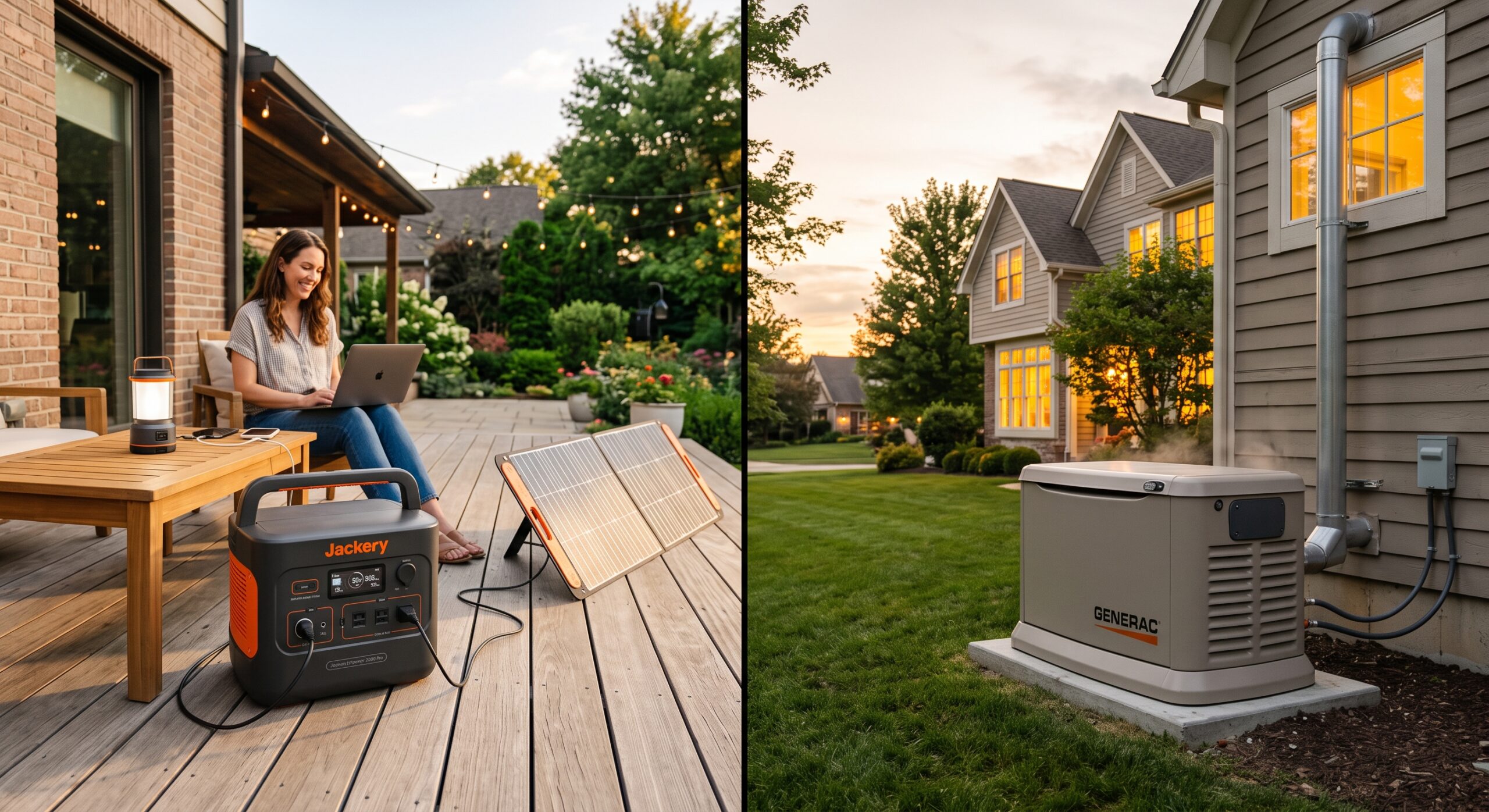
When planning for power outages, most homeowners end up choosing between two very different solutions: a portable power station or a whole-home standby generator. Both keep the lights on, but they differ enormously in cost, installation, capacity, and what kind of outage they’re actually built for. Here’s how to decide which one fits your situation.
Quick Comparison
| Factor | Portable Power Station | Whole-Home Generator |
|---|---|---|
| Typical cost | $300-$3,500 | $5,000-$15,000+ installed |
| Installation | None — plug and play | Professional installation required |
| Fuel source | Rechargeable battery (wall, solar, car) | Natural gas or propane |
| Runtime | Hours to a few days (capacity-dependent) | Days to weeks (fuel-dependent) |
| Noise | Silent | Audible engine noise |
| Maintenance | Minimal | Regular servicing, fuel lines, permits |
| Best for | Essentials: fridge, Wi-Fi, medical devices, lighting | Powering the entire house, including HVAC |
What a Portable Power Station Is Best For
Portable power stations are rechargeable battery systems that store energy and release it through standard outlets, USB ports, and sometimes car-style sockets. They’re designed for targeted backup rather than powering an entire home.
Best suited for:
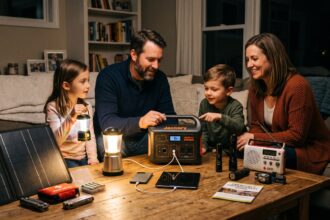
- Keeping a refrigerator, Wi-Fi router, and phone chargers running during short-to-medium outages
- Households without the budget or space for a permanent generator installation
- Renters, since no electrical or gas work is required
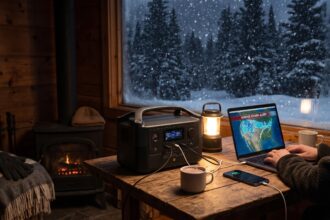
- Backup for medical equipment (CPAP machines, oxygen concentrators) where silent, indoor-safe operation matters
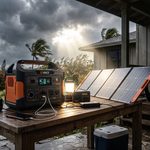
- Combining with solar panels for outages that stretch beyond a day or two
Limitations:
- Cannot typically run high-draw appliances like central air conditioning or electric ovens for extended periods
- Capacity is finite — once depleted, it needs to be recharged (from the wall, a car, or solar panels)
What a Whole-Home Generator Is Best For
Standby generators are permanently installed, connect directly to your home’s electrical panel, and run on natural gas or propane. When the power goes out, they typically start automatically within seconds.
Best suited for:
- Homeowners who want the entire house — including HVAC, water heater, and kitchen appliances — to keep running normally
- Areas with frequent, extended outages (multiple days at a time)
- Households with critical, high-draw medical or business equipment that can’t tolerate any gaps in power
- Anyone willing to invest in permanent installation and ongoing maintenance for «outage-proof» peace of mind
Limitations:
- High upfront cost, plus permitting and professional installation
- Requires a fuel supply (natural gas line or propane tank) and regular maintenance
- Not portable — it’s tied to the property, so it doesn’t help if you’re traveling, camping, or need backup power elsewhere
Cost Comparison Over Time
A portable power station is a one-time purchase with no installation cost, though very high-capacity modular systems can approach $3,000-$4,000. A whole-home generator involves a much larger upfront investment ($5,000-$15,000 including installation) plus ongoing costs: annual servicing, fuel, and occasional part replacement. For homeowners who only experience occasional short outages, the total cost of a power station is almost always lower over a 5-10 year period.
Can You Use Both?
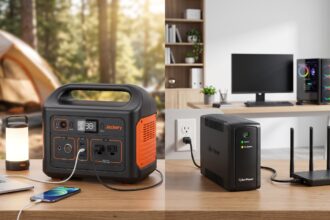
Many households end up using both, and for good reason — they solve different problems. A whole-home generator handles extended outages and high-draw appliances, while a portable power station provides a quiet, no-maintenance backup for essentials, works during outages caused by fuel supply issues (a real risk with generators during major regional disasters), and can travel with you for camping, road trips, or work outside the home.
Which One Should You Choose?
- Choose a portable power station if: you experience occasional short outages, you rent your home, you need silent operation for medical equipment, or your budget is under $1,000-$1,500.
- Choose a whole-home generator if: outages in your area regularly last multiple days, you own your home and can invest in permanent installation, or you have appliances (central AC, well pump, electric heat) that a portable unit can’t realistically cover.
- Choose both if: you want the reliability of a whole-home system for major outages, plus a portable, silent backup for everyday essentials, travel, or as a bridge while a generator’s fuel supply is restocked.
Bottom Line
There’s no universally «better» option — it depends on the length and frequency of outages in your area, your budget, and whether you need to power the whole house or just the essentials. For most homeowners dealing with occasional storms, a portable power station covers the real day-to-day risk at a fraction of the cost. For those in outage-prone regions who depend on uninterrupted power, a whole-home generator remains the more complete solution.