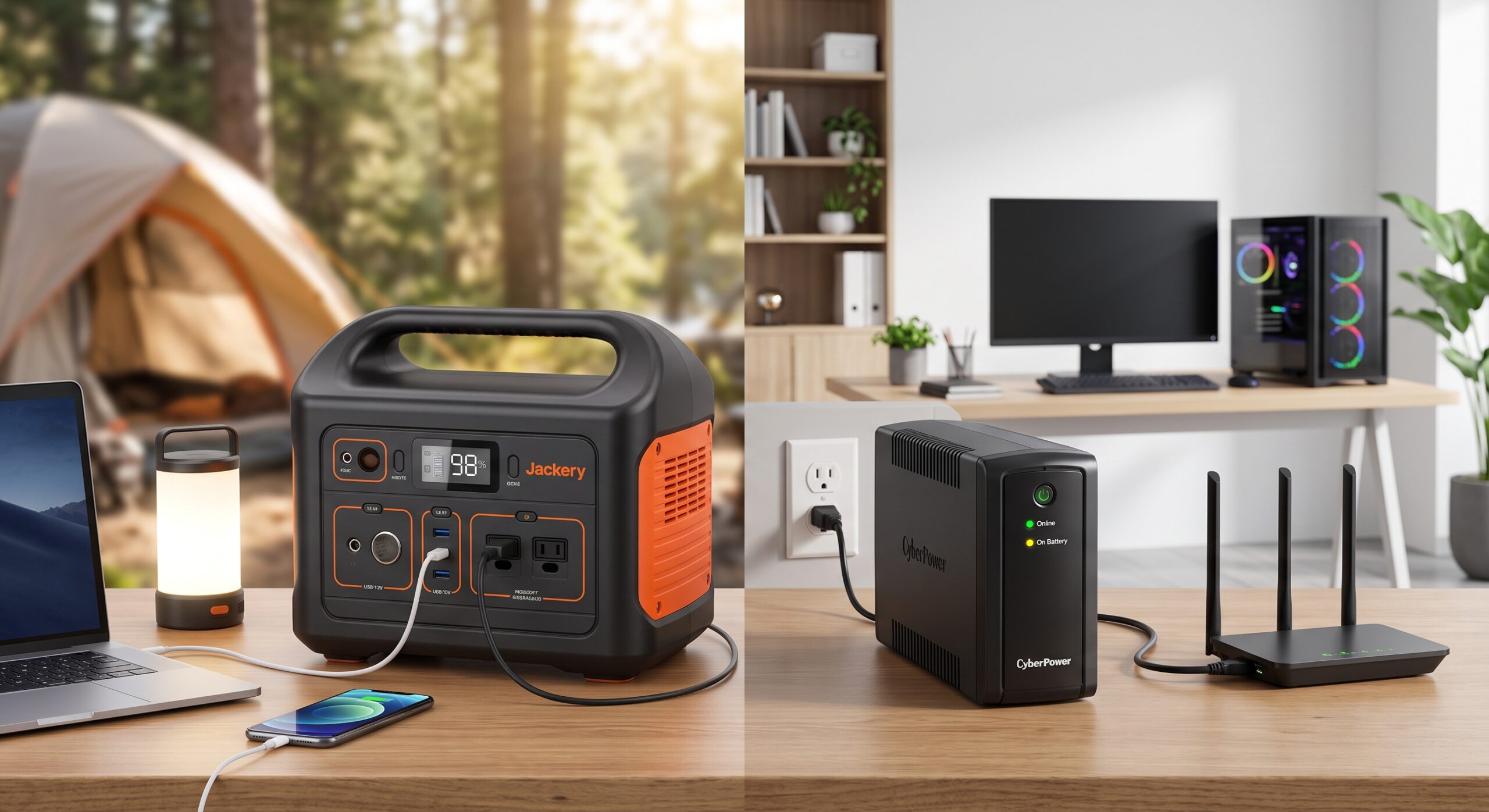
Both portable power stations and UPS (uninterruptible power supply) units store electricity in a battery and release it when the power goes out — which is exactly why they get confused with each other so often. But they’re built for very different jobs, and choosing the wrong one for your situation means either overpaying for capacity you don’t need, or being left without enough power when it actually matters. Here’s how they differ, and which one fits your situation.
Quick Comparison
| Factor | Portable Power Station | UPS (Battery Backup) |
|---|---|---|
| Primary purpose | Extended backup power for multiple devices | Instant, brief protection against power loss/spikes |
| Typical runtime | Hours to days | Minutes to a couple of hours |
| Switchover time | Manual (plug in) or seconds if pre-connected | Instant, automatic, no interruption at all |
| Capacity range | 150Wh-25,000Wh+ | Typically 300-1,500Wh equivalent |
| Portability | Designed to be moved and carried | Usually stays connected in place |
| Best for | Refrigerators, medical devices, lighting, camping, emergencies | Computers, servers, networking gear, sensitive electronics |
| Price range | $150-$4,000+ | $50-$500 (home/office use) |
What a UPS Is Actually Built For
A UPS is designed first and foremost to protect against instant power loss and power quality issues — not to run your household for hours. When the power drops, a UPS switches to battery instantly, with zero interruption, which matters enormously for devices that would otherwise crash, corrupt data, or shut down unsafely the moment power cuts out.
A UPS is built for:
- Desktop computers and servers, where a sudden shutdown can corrupt files or damage hardware
- Networking equipment (routers, modems, switches) that need to stay online through brief outages
- Sensitive electronics that are vulnerable to power surges and voltage fluctuations, which a UPS also filters out
- Bridging the very short gap between a power outage starting and a generator or larger power station taking over
A UPS is not built for:
- Running a refrigerator or space heater for hours
- Multi-day outages — most home/office UPS units only provide 5-30 minutes of runtime under real load, occasionally up to an hour or two for lighter loads
- Portable, on-the-go use — UPS units are designed to stay plugged in continuously, not to be carried around
What a Portable Power Station Is Actually Built For
A portable power station is designed for sustained runtime across multiple devices, prioritizing capacity and portability over instant, zero-gap switchover. Most units take a few seconds to switch over if not left continuously connected, which is irrelevant for a refrigerator or a lamp, but would be a problem for a server or a desktop computer mid-task.
A power station is built for:
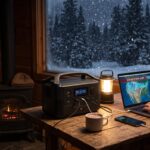
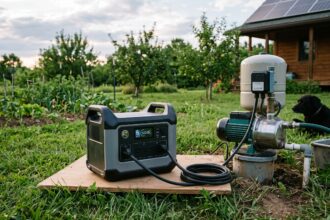
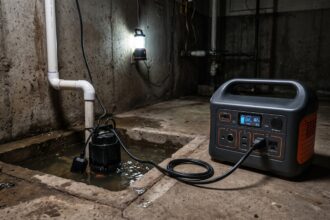
- Refrigerators, medical equipment, lighting, and device charging during outages lasting hours to days
- Camping, van life, and off-grid use, where portability and solar charging matter
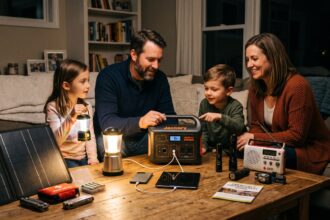
- Multi-device households that need to power several things at once, not just protect one sensitive piece of equipment
- Situations where you want to recharge via solar, a car, or a generator, not just a wall outlet
A power station is not ideal for:
- Protecting a desktop computer from a sudden power cut, since most units have a brief switchover delay unless kept continuously plugged in
- Filtering out power surges and voltage sags the way a purpose-built UPS does (though many higher-end power stations do offer some surge protection)
Switchover Time: Why It Matters More Than People Expect
This is the single biggest technical difference between the two categories. A true UPS uses either a «line-interactive» or «double-conversion» design that keeps the battery constantly engaged, so there’s no gap at all when the power drops — critical for a server that can’t tolerate even a quarter-second interruption.
Most portable power stations, by contrast, are designed to be plugged in after the power goes out, or used as a standalone power source rather than a pass-through backup. Some higher-end models do offer a UPS-style pass-through mode with sub-20-millisecond switchover, but it’s worth checking this specifically if you plan to use a power station to protect a computer or server — not all models support it, and the ones that do usually advertise it explicitly as a «UPS function» or «pass-through mode.»
Capacity and Runtime: Why a Power Station Wins for Longer Outages
A typical home/office UPS is built around a small battery (often 300-600Wh equivalent) designed to bridge a brief gap, not sustain a load for hours. Under a real load — say, a desktop computer and monitor drawing 150-250W — most consumer UPS units provide only 10-20 minutes of runtime, just enough to save your work and shut down safely, or to bridge the gap until a generator kicks in.
A portable power station, even an entry-level one, typically offers 5-20x the usable capacity of a UPS at a similar price point, because it’s not designed around instant switchover circuitry — it’s designed around storing and delivering energy efficiently over a longer period.
Can You Use Both Together?
Yes, and for certain setups, this is actually the ideal combination. A common approach:
- Keep a UPS on sensitive electronics (desktop computer, server, networking equipment) for instant, gapless protection against short outages and power fluctuations.
- Use a portable power station for everything else — refrigerator, lighting, medical devices, phone charging — where a few seconds of switchover time doesn’t matter.
- Some households use a UPS as a bridge, keeping critical equipment running in the first minute or two of an outage while they manually connect a larger power station for sustained backup.
This layered approach gets the best of both: instant protection where it matters most, and sustained capacity where raw runtime matters more than switchover speed.
Which One Should You Choose?
- Choose a UPS if: your main concern is protecting a computer, server, or networking equipment from sudden shutdowns and power surges, and you don’t need more than 10-30 minutes of backup runtime.
- Choose a portable power station if: you need to keep multiple devices running for hours or days, want portability and solar charging options, or are building an emergency preparedness or camping setup.
- Choose both if: you have sensitive electronics that need instant, gapless protection, alongside broader household needs (fridge, lighting, medical devices) that require sustained runtime over a longer outage.
Bottom Line
A UPS and a portable power station solve two different problems that happen to look similar on the surface. A UPS is about protecting sensitive electronics from the instant of a power failure, with only enough runtime to shut down safely or bridge a brief gap. A portable power station is about sustaining power to multiple devices for hours or days, with far more capacity but a small delay in switchover unless it’s specifically designed with a pass-through UPS mode. For most households building an emergency power setup, the power station is the more versatile purchase — but pairing it with a small UPS for computers or networking gear covers the gap a power station alone doesn’t.