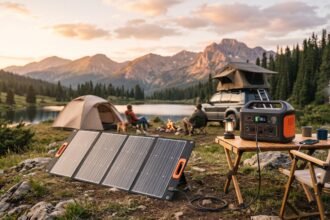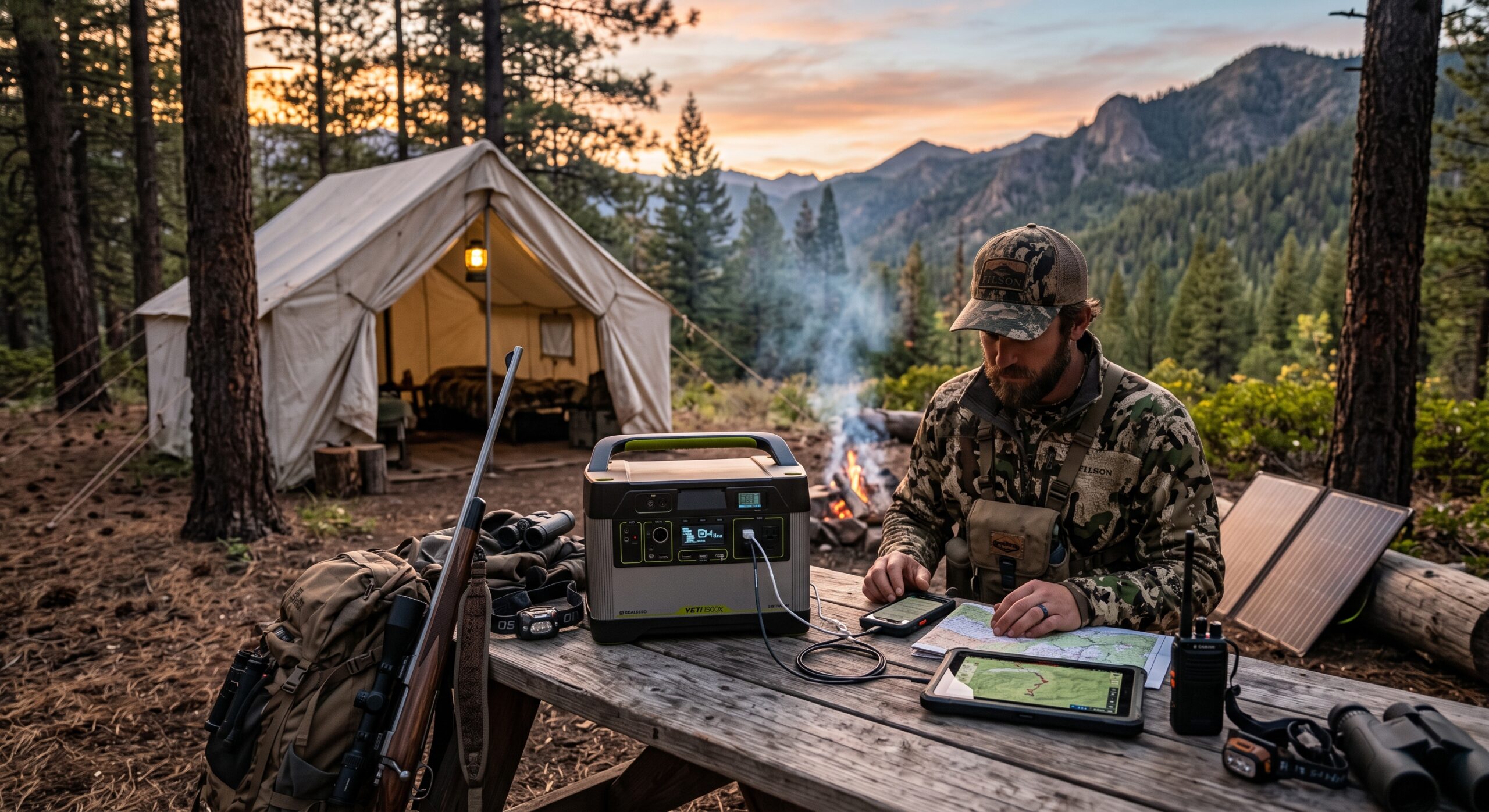
Remote hunting camps often sit well beyond any power grid, sometimes for a full week or more during a hunting season, which makes power planning a genuinely different problem than a weekend camping trip. Hunters need to balance several competing demands at once: keeping a game camera and trail equipment running continuously for weeks, powering lighting and a heater in cold-weather camps, running a fridge or freezer for harvested meat, and doing all of this with equipment that’s rugged enough to survive being hauled in on an ATV, packed on a horse, or carried in on foot. This guide breaks down the best power stations for off-grid hunting camps, along with how to size a system for the specific demands of a hunting trip.
Quick Answer: Our Top Picks
- Best Overall for Hunting Camps: Bluetti AC200L — strong capacity and output for multi-day, multi-device camps
- Best for Extended Season-Long Camps: EcoFlow Delta Pro — expandable capacity for weeks-long remote stays
- Best for Meat Storage/Freezer Use: Bluetti AC500 + B300S — modular system for sustained refrigeration
- Best Compact Option for Backcountry/Pack-In Hunts: Anker Solix C300 — light enough to carry in on foot or by horse
- Best Budget Option for Weekend Hunts: Jackery Explorer 1000 v2 — solid capacity without the premium price
What Makes Hunting Camp Power Needs Unique
Hunting camps combine elements of camping, off-grid living, and cold-weather backup power, often all at once:
- Trail cameras and game cameras typically draw very little power individually, but if you’re running or charging several units continuously for weeks, the cumulative demand adds up.
- Cold-weather camps (fall and winter hunting seasons) introduce the same battery performance concerns as winter storm backup — reduced capacity and slower charging in freezing temperatures.
- Meat storage after a successful harvest can suddenly add a major new power demand mid-trip, running a cooler, fridge, or small freezer continuously to preserve meat until it can be transported out.
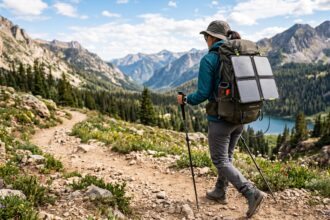
- Remote access limits recharge options. Unlike car camping, many hunting camps are accessed by ATV, horse, or on foot, meaning solar and battery capacity often need to sustain the entire trip without a vehicle-based recharge option nearby.
- Rugged handling during transport — being strapped to an ATV rack, packed on a horse, or carried in a backpack — means durability matters more than for a car camping trip where the unit mostly just rides in a trunk.
Top Power Stations for Hunting Camps
1. Bluetti AC200L — Best Overall
At 2,048Wh capacity with strong continuous output (2,400W) and the option to add external battery packs later, the AC200L comfortably handles a realistic combination of hunting camp loads: lighting, device and trail camera charging, a heater running intermittently, and even a small cooler or fridge for short-term meat storage. Its balance of capacity, output, and expandability makes it a strong all-around choice for camps accessed by vehicle or ATV where weight is less of a constraint than for a pack-in hunt.
Best for: Vehicle or ATV-accessible camps running multiple devices, lighting, and occasional heating together.
2. EcoFlow Delta Pro — Best for Extended Season-Long Camps
Hunters who maintain a semi-permanent camp for an extended season, or who stay out for a week or more at a time, benefit from the Delta Pro’s 3,600Wh base capacity, expandable to 25kWh with additional batteries. This level of scalability supports running lighting, heating, refrigeration, and charging simultaneously across many consecutive days without needing to ration usage or find a recharge opportunity partway through the trip.
Best for: Long-duration or semi-permanent hunting camps where reliability across weeks matters more than portability.
3. Bluetti AC500 + B300S — Best for Meat Storage/Freezer Use
A successful hunt often means a sudden new demand: keeping harvested meat cold or frozen until it can be processed or transported. The modular AC500 system, expandable up to 18,432Wh across multiple battery packs, provides enough sustained capacity to run a cooler or small chest freezer continuously for days, on top of the camp’s existing lighting and device charging needs.
Best for: Hunters who need to reliably preserve meat in camp for multiple days after a harvest.
4. Anker Solix C300 — Best Compact Option for Backcountry/Pack-In Hunts
For backcountry hunts accessed on foot or by horse, where every pound matters, the Solix C300’s roughly 288Wh capacity and compact size cover essential lighting, phone/GPS charging, and trail camera power without adding significant bulk to a pack or saddle load. It won’t run a heater or fridge, but for hunters prioritizing minimal gear over camp comforts, it covers the genuine essentials.
Best for: Pack-in backcountry hunts where weight is the primary constraint.
5. Jackery Explorer 1000 v2 — Best Budget Option
For weekend or short hunting trips where a full modular system isn’t justified, the Explorer 1000 v2’s 1,000Wh capacity and solid 1,000W output cover lighting, device charging, and short-term cooler use at a more accessible price point than premium expandable systems.
Best for: Shorter hunting trips or hunters testing out off-grid power for the first time without a large upfront investment.
Sizing Your System for a Hunting Camp
- List baseline daily loads: lighting (typically low, a few hours each evening), phone/GPS/radio charging, and any trail cameras being charged or run directly off the system.
- Add heating if applicable. A small heater running even a couple of hours a day in a cold-weather camp can add 1,000-3,000Wh to daily demand — this is often the single largest variable in sizing a hunting camp power system.
- Plan for meat storage as a contingency, not a guarantee. Since you don’t know in advance whether or when a harvest will happen, it’s worth sizing your system with enough headroom to add a cooler or small fridge partway through the trip without exceeding capacity.
- Multiply your daily total by trip length, minus any days you expect meaningful solar recharge, to estimate total capacity needed for a fully self-sufficient trip.
- Factor in access method. Vehicle or ATV-accessible camps can justify larger, heavier systems; pack-in camps on foot or horseback need to prioritize weight even at the cost of some capacity.
Cold Weather Considerations for Hunting Camps
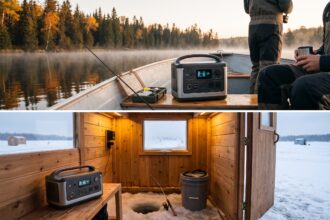
- Battery performance and charging ability both decrease in freezing temperatures, similar to winter storm backup and ice fishing setups — budget extra capacity as a buffer rather than assuming warm-weather runtime estimates apply directly.
- Store the power station in an insulated tent or shelter when possible, rather than leaving it exposed to overnight freezing temperatures, to help maintain more stable performance.
- Allow a cold unit to warm before charging it, since charging a very cold lithium battery too quickly can cause long-term damage.
- Consider a cold-weather-rated model if hunting primarily in late fall or winter seasons, since some manufacturers specify better low-temperature performance than others.
Trail Camera and Remote Equipment Power Considerations
Many hunters run trail cameras on their own dedicated batteries rather than the main camp power station, but for camps that centralize charging of multiple camera batteries, it’s worth accounting for this as a recurring daily or weekly load rather than a one-time draw. A handful of trail camera batteries recharging over the course of a multi-day trip typically adds a modest but real amount to overall demand, especially if cameras are swapped and recharged on a rotating schedule throughout the season.
Durability and Transport Considerations
- Choose a unit with a sturdy handle and reinforced casing if it will be strapped to an ATV rack or carried on uneven terrain repeatedly throughout the trip.
- Protect against moisture and dust, especially for camps in wet or muddy conditions, even though most power stations aren’t rated for full weatherproofing.
- Secure the unit during ATV or horse transport to avoid excessive vibration or impact damage over rough backcountry trails.
Bottom Line
Hunting camp power needs sit at the intersection of remote camping, cold-weather backup, and the unpredictable added demand of meat storage after a successful harvest — which makes sizing a system correctly more complex than a typical weekend camping trip. The Bluetti AC200L offers the most practical, well-rounded capability for most vehicle or ATV-accessible camps, while backcountry hunters accessing camp on foot or by horse should prioritize the lighter, more compact Anker Solix C300 and accept its more limited capabilities in exchange for portability. Whatever system you choose, building in extra capacity as a buffer — for cold weather performance losses and the possibility of needing to preserve meat mid-trip — is the difference between a power setup that handles a real hunting season and one that only works under ideal, planned-for conditions.