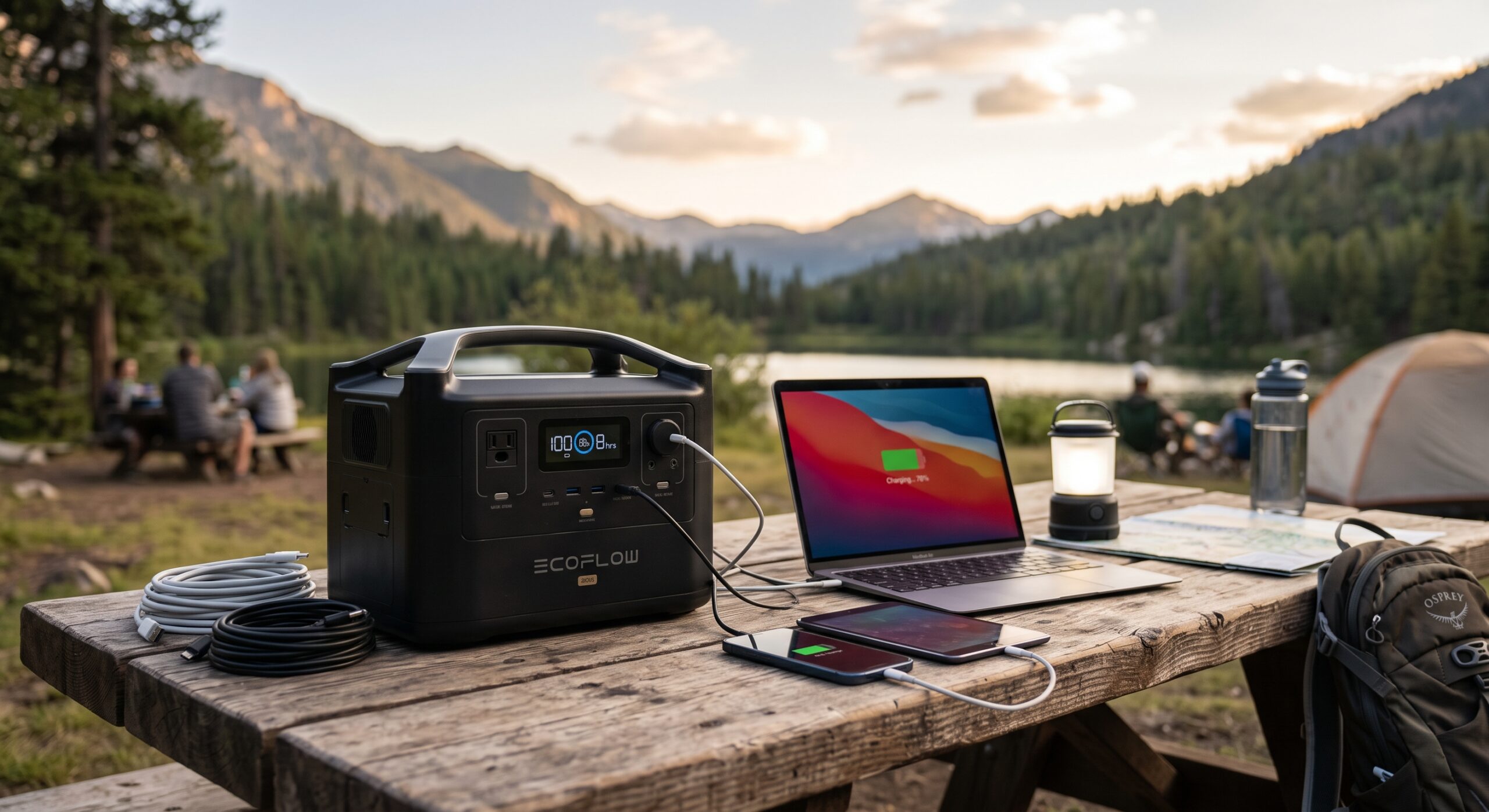
Warranty length and coverage vary meaningfully across power station brands, and this is worth factoring into a purchase decision, especially for higher-capacity, higher-cost units.
When investing in a portable power station or solar generator, buyers frequently spend hours analyzing watt-hours, pure sine wave inverter thresholds, solar charging input wattages, and surge capacities. Yet, one of the most critical factors governing the true value of your investment is frequently overlooked until an issue occurs: the manufacturer’s warranty policy.
A power station is a complex piece of integrated engineering. Unlike traditional gas generators that consist primarily of mechanical components that any small-engine mechanic can repair, a modern solar generator combines delicate high-capacity lithium battery cells, high-voltage bidirectional inverters, sophisticated MPPT solar charge controllers, thermal sensors, and computerized Battery Management Systems (BMS). If any of these core microprocessors or inverter boards fail, user-serviceable repairs are virtually impossible. Therefore, a comprehensive and accessible manufacturer warranty serves as your only safety net against total hardware loss.
Typical Warranty Lengths by Brand
To understand how the major players in the industry protect your purchase, review the baseline coverage breakdown across the leading portable power station brands:
| Brand PDF | Typical Standard Warranty PDF | Extended Warranty Available? PDF |
| Jackery | 2-3 years (varies by model) | Yes, often purchasable |
| EcoFlow | 2-5 years (varies by model, longer on premium units) | Yes, on select models |
| Bluetti | 2-5 years (varies by model) | Yes, on select models |
| Anker Solix | 3-5 years | Sometimes included standard on premium models |
Warranty length often scales with the unit’s price tier premium, higher-capacity models frequently come with longer standard coverage than entry-level units within the same brand’s lineup.
Comprehensive Brand Warranty Breakdown
Navigating the nuances of each manufacturer’s warranty policy reveals distinct differences in registration requirements, customer service accessibility, and overall coverage scope.
1. Jackery: Simple Terms with Registration Perks
Jackery built its brand reputation on accessible, user-friendly outdoor gear, and its warranty structure reflects that simplicity.
- Base Coverage: Historically, entry-level Explorer models (such as the legacy Explorer 240, 300, and 500) came with a standard 2-year warranty.
- Pro and Plus Series Expansion: With the rollout of the Explorer Pro and LiFePO4-equipped Plus series (such as the Explorer 1000 Plus and 2000 Plus), Jackery upgraded its baseline coverage to 3 years.
- Free Warranty Extensions: Jackery frequently allows buyers to unlock an additional 2 years of warranty protection for free simply by registering their product on the official Jackery website or buying directly from their official web store, pushing total coverage to a competitive 5 years on premium gear.
- Customer Support Experience: Jackery maintains responsive, North American and European-based customer support centers. Their warranty process is relatively straightforward, requiring proof of purchase, the unit’s serial number, and a brief video documenting the operational fault.
2. EcoFlow: Tiered Protection for High-Performance Ecosystems
EcoFlow operates a tiered warranty structure that directly reflects the hardware generation and product category of the device.
- Entry-Level and Legacy Gear: Smaller, budget-friendly units in the River series typically carry a 2-year standard factory warranty.
- Delta Series and Home Ecosystems: Flagship units like the Delta 2, Delta 2 Max, Delta Pro, and Delta Pro Ultra come standard with an industry-leading 5-year warranty.
- Expansion Battery Coverage: Companion expansion batteries usually share the same warranty duration as the host power station, provided they were purchased from an authorized retailer.
- Service Logistics: EcoFlow has established dedicated repair depots across North America and Europe. For verified warranty defects within the first year, EcoFlow typically covers round-trip freight shipping, providing prepaid shipping labels to return the unit to a diagnostic center.
3. Bluetti: Heavy-Duty Coverage for Modular Microgrids
Bluetti designs systems intended for demanding off-grid environments, and their warranty terms align with heavy daily cycling.
- Model-Specific Variations: Baseline portable units (such as the EB3A or AC2A) often feature 2-year terms, while mid-tier and flagship heavy-duty models (such as the AC180, AC200L, AC300, and AC500) provide 4 to 5 years of standard factory warranty protection.
- Modular Unit Synchronization: When buying modular setups—such as an AC500 head unit paired with multiple B300S expansion packs—each individual serial-numbered component carries its own warranty tracking.
- Self-Service and Firmware Diagnostics: Bluetti’s technical team often utilizes remote app-based diagnostics. Through the Bluetti mobile app, support engineers can review system error logs and push customized firmware patches to resolve inverter synchronization faults before requiring you to ship a heavy 60-pound unit back to a facility.
4. Anker Solix: Industry-Leading Consumer Standard
Leveraging decades of global consumer electronics leadership, Anker arrived in the power station sector with an aggressive warranty policy.
- The 5-Year Standard: Under their proprietary InfiniPower branding, Anker provides a standard, comprehensive 5-year full-device warranty across virtually their entire Solix portable generator lineup (including the C1000, F2000, and F3800).
- Hassle-Free Replacement: Anker’s warranty execution is widely regarded as one of the smoothest in the industry. If a unit experiences a critical hardware or mainboard failure within the covered period, Anker frequently issues an advanced replacement or a pre-paid return authorization with minimal procedural friction.
What Warranties Typically Cover
Most standard warranties cover manufacturing defects and battery capacity degradation beyond a specified threshold, but typically exclude physical damage, water damage, or unauthorized modification.
To fully understand the legal protection your purchase includes, it is necessary to examine the specific components and scenarios covered:
Covered Components and Faults
- Pure Sine Wave Inverter Failures: If the internal AC inverter stops outputting power, fails to handle loads within its rated running capacity, or emits continuous electrical fault codes during normal operation, it is fully covered as a manufacturing defect.
- Internal Battery Management System (BMS) Malfunctions: Faulty temperature sensors, broken charging relays, corrupted coulomb counters, or unexpected system lockouts fall squarely under factory warranty protection.
- Port and Display Board Failures: Malfunctioning LCD/OLED screens, unresponsive AC/DC power buttons, or failed USB-C Power Delivery boards resulting from bad internal solder connections are covered repairs.
- Excessive Battery Degradation: Many manufacturers include a capacity retention clause in their warranty terms. If your Lithium Iron Phosphate (LiFePO4) battery pack drops below 70% or 80% of its rated capacity within the warranty timeframe under normal, documented usage, the manufacturer will replace or re-cell the unit.
Common Exclusions and Voiding Triggers
Understanding what is not covered is just as important as knowing what is:
| Exclusion Category | Real-World Scenario Causing Voided Warranty |
| Physical Impact & Dropping | Dented chassis, cracked handles, or internal rattling caused by dropping the unit off a truck tailgate. |
| Water & Moisture Ingress | Leaving a non-weatherproof unit out in a downpour or exposing ports to heavy morning dew and ocean salt spray. |
| Sub-Zero Charging Abuse | Forcing an LFP battery to charge when cell temperatures are below 32°F (0°C), causing irreversible lithium plating. |
| Over-Voltage Solar Input | Connecting third-party solar panels wired in series that exceed the power station’s maximum Open Circuit Voltage (Voc). |
| Unauthorized Modification | Opening the outer housing, attempting DIY internal component soldering, or modifying factory charging cables. |
| Unauthorized Resellers | Purchasing “New In Box” units from unverified third-party liquidation auctions, unauthorized eBay sellers, or local peer-to-peer marketplaces. |
Why This Matters More for Larger Purchases
A $150 entry-level unit represents less financial risk if something goes wrong, but a $2,000+ premium system justifies more careful warranty comparison, since the cost of an early failure without adequate coverage is significantly higher.
When you purchase a compact 200Wh power station for $150 to keep your mobile phone and headlamps charged while camping, a hardware failure outside the warranty window is inconvenient, but financially manageable. However, the financial equation fundamentally changes when you invest in a multi-kilowatt home backup solution or a heavy-duty van life electrical setup.
The True Cost of High-Capacity Out-of-Warranty Repairs
High-capacity systems—such as the EcoFlow Delta Pro, Bluetti AC500, or Anker Solix F3800—often represent investments between $2,000 and $5,000. Consider the real-world costs if one of these systems experiences a component failure without warranty coverage:
- Hazardous Freight Shipping: Power stations exceeding 300Wh are legally classified as Class 9 Dangerous Goods (hazmat) due to their high-energy lithium content. Shipping an 80-pound to 100-pound power station to a certified repair facility with hazardous materials documentation can easily cost $150 to $250 each way.
- Inverter Board Replacements: Replacing a blown 3,600W or 5,000W split-phase inverter motherboard out of pocket often costs $600 to $900 in parts and specialized labor.
- Total Economic Loss: Because integrated battery cases are tightly sealed and potted with protective thermal resins, many repair depots will not perform component-level board rework. If the unit is out of warranty, you may be forced to scrap the entire system.
Investing in a platform backed by a verified 5-year standard warranty guarantees that your investment is fully protected for half a decade of heavy cycling, providing peace of mind that a cheaper, poorly backed alternative cannot match.
Step-by-Step Guide: How to Protect Your Warranty and File a Successful Claim
To ensure that you never encounter friction if you need to execute a warranty claim, implement this four-step administrative checklist the day your unit arrives:
1. Preserve Proof of Purchase and Packaging
Factory warranties are strictly non-transferable and require proof of purchase from an authorized dealer.
- Save the original digital invoice (PDF) showing the purchase date, seller name, order number, and specific model.
- Keep the original manufacturer shipping box and custom foam inserts for at least the duration of the return and warranty window. Sourcing custom-molded hazmat-compliant shipping boxes for an irregular 70-pound battery unit is difficult and expensive.
2. Register the Product Immediately
Do not wait for a component to malfunction before creating an account with the manufacturer.
- Locate the physical serial number barcode on the underside or rear panel of your generator.
- Navigate to the manufacturer’s official warranty registration portal.
- Upload your receipt and register the serial number. This establishes an official date-stamped record in the brand’s customer database and often activates free warranty extension periods.
3. Document Faults Clearly
If an error occurs, manufacturer support teams will require tangible proof before issuing a Return Merchandise Authorization (RMA).
- Take High-Resolution Photos: Capture the serial number sticker, the overall setup, and all connected cables.
- Record Video Proof: Record a 30-second video demonstrating the fault. Show the unit powering on, the exact error code appearing on the display screen, and the appliance that triggers the overload. Clear video documentation reduces support back-and-forth by days.
4. Verify Hazmat Return Procedures
When returning a power station for factory service:
- Ensure the manufacturer issues a prepaid shipping label that includes proper UN3480 / UN3481 lithium battery hazard warnings.
- Discharge the battery down to roughly 30% capacity prior to packing if instructed by support; shipping regulations prohibit air or standard ground transit of high-capacity lithium units at 100% state of charge.
Bottom Line
Warranty length and coverage vary enough across brands and models to be worth checking explicitly before a purchase, particularly for higher-cost units. Anker Solix and premium EcoFlow/Bluetti models tend to offer the longest standard coverage, while confirming the specific terms for your exact model rather than assuming based on general brand reputation is the safest approach before a significant purchase.
By verifying that your chosen system includes at least a 3- to 5-year factory-backed warranty, ensuring you purchase exclusively through authorized sales channels, and properly registering your serial number on delivery day, you protect your energy independence system against unexpected component failures and secure dependable off-grid power for years to come.