Multi-day festivals and outdoor events create a specific power challenge: keeping phones, cameras, and small comfort devices charged across several days in a campsite setting, often without vehicle access nearby.
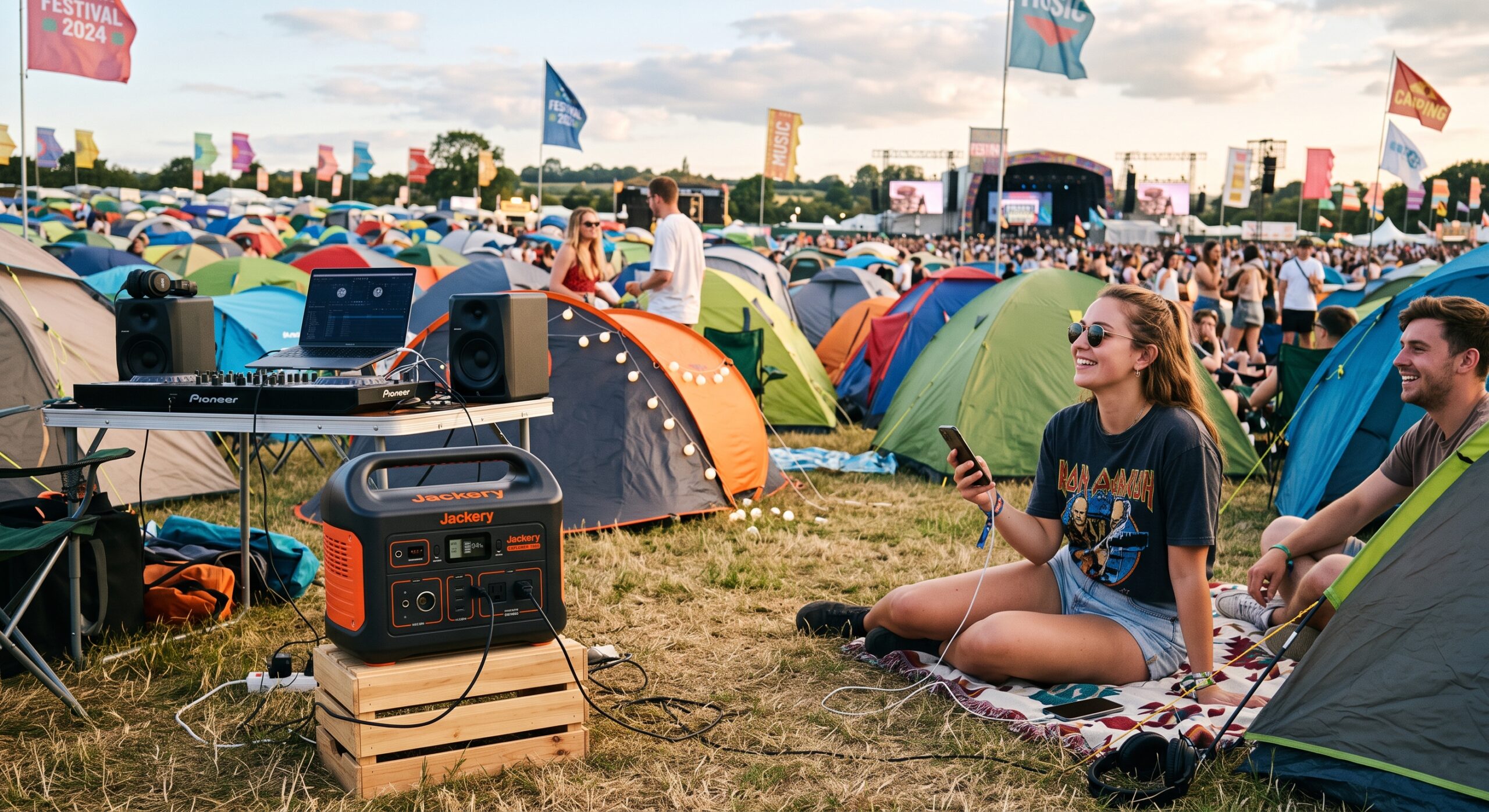
When you are camping at a massive music festival, the logistical reality is completely different from a standard weekend in the woods. You are typically parked miles away, forcing you to haul all your survival gear on foot through sprawling, uneven festival grounds. Bringing a massive, 50-pound home backup generator is entirely out of the question. Yet, the demand for electricity is surprisingly high. Between capturing high-definition video, fighting crowded cellular networks, and powering ambient camp lighting for late-night socializing, a reliable, ultra-portable power station transforms your campsite from a dark, disconnected tent into a comfortable, self-sustaining basecamp.
Quick Comparison: Top Festival Power Stations
| Power Station Model | Battery Capacity | Standout Festival Advantage | Target Festival-Goer |
| Anker Solix C300 | ~288Wh | Compact enough to carry into a festival campsite while offering enough capacity for multiple days of phone charging and small device use. | Best Overall: The dedicated camper who wants squad-level charging without back-breaking weight. |
| Jackery Explorer 300 v2 | ~288Wh | Similar capacity and use case, a solid alternative if Anker isn’t available or preferred. | Best Alternative: Those who prioritize rugged, drop-resistant builds for chaotic camp environments. |
| BioLite Charge 80 | ~74Wh | For festival-goers prioritizing minimal gear, this covers basic phone charging without adding much weight or bulk to festival packing. | Best Ultralight Option: The minimalist packing everything into a single carry-on backpack. |
Typical Festival Power Needs
To survive a three- or four-day event without your devices dying before Sunday’s headliner, you must understand exactly how festival conditions accelerate battery drain.
- Phone charging (often heavy use for photos/video): 15-20Wh per charge, multiple charges daily. Music festivals are a worst-case scenario for smartphone batteries. Screens are pushed to maximum brightness to combat the midday sun. Cameras are constantly recording high-bitrate 4K video. Most significantly, your phone is constantly searching for a signal while competing against 80,000 other attendees on temporary cellular towers, which causes the internal antenna to run at maximum power. You should budget for at least two full phone recharges per person, per day.
- Portable speaker: 10-30W. The festival experience does not end when you leave the main stage. Keeping the energy going at your campsite during the morning pre-game or the late-night wind-down requires a Bluetooth speaker. Recharging a mid-sized waterproof speaker typically consumes roughly 20Wh to 30Wh of capacity.
- String lights/lantern for campsite: 5-15W. Navigating a crowded, chaotic campsite in pitch darkness is a recipe for tripping over tent stakes and guy-lines. A set of low-draw LED fairy lights or a central LED lantern not only provides critical safety illumination but also helps you identify your specific tent from a distance in a sea of identical campsites.
- Camera/GoPro charging: 10-20W. Action cameras are essential for capturing crowd footage and campsite memories, but their tiny internal batteries rarely last more than an hour of continuous recording. Keeping a rotating stock of GoPro batteries charged demands a steady, reliable flow of low-wattage DC power.
Deep Dive: Top Picks for the Campsite
1. Anker Solix C300 Best Overall
When evaluating gear that must be carried by hand across a massive festival footprint, energy density is everything. The Anker Solix C300 strikes the ultimate balance, housing roughly 288Wh of capacity inside a chassis that weighs less than ten pounds.
Its standout feature for festival environments is its high-density port selection and advanced Lithium Iron Phosphate (LiFePO4) chemistry. Because festival campsites are often crowded, you are rarely just charging your own devices; your friends will inevitably ask to plug in. The C300 offers multiple high-speed USB-C Power Delivery ports, allowing three or four people to rapid-charge their smartphones simultaneously before heading into the venue. The LiFePO4 battery architecture is also incredibly thermally stable. If your tent turns into an oven under the midday sun, the C300’s battery cells are vastly safer and more resistant to heat degradation than older lithium-ion packs.
2. Jackery Explorer 300 v2 Best Alternative
Festival campsites are inherently chaotic environments. Drinks get spilled, gear gets kicked in the dark, and dust coats everything. The Jackery Explorer 300 v2 offers an incredibly resilient alternative characterized by its signature impact-resistant unibody shell.
Jackery’s engineering ethos focuses on uncomplicated, plug-and-play operation. There are no confusing companion apps or firmware updates required to get power flowing; you simply press a tactile physical button to activate the USB or AC ports. The integrated, solid-molded handle makes it incredibly easy to grab and move, or even strap to the outside of a hiking backpack with a carabiner. Its pure sine wave inverter safely handles standard AC wall plugs, meaning if someone in your camp needs to plug in a specialized camera battery cradle or an air mattress pump, the Jackery provides clean, stable power.
3. BioLite Charge 80 Best Ultralight Option
Not everyone attends festivals with a massive multi-room tent and a wagon full of gear. For those flying into destination events (like Tomorrowland or Coachella) where luggage space is strictly limited to a single backpack, traditional power stations are simply too large.
The BioLite Charge 80 is essentially a highly ruggedized, heavy-duty pocket power bank. While it lacks the AC wall outlets of its larger competitors, it provides just enough USB-C capacity to keep a single smartphone alive through a three-day weekend. Its silicone-wrapped exterior absorbs drops on concrete or hard-packed dirt, and its slim, flat profile allows it to slide effortlessly into a hydration pack or a fanny pack, giving you on-the-go power directly at the festival barricades.
The 3-Day Festival Energy Budget
To understand why the 300Wh capacity tier is the sweet spot for festival camping, consider this hypothetical weekend power budget for a two-person tent:
- Smartphones: 2 phones × 1.5 charges per day × 15Wh × 3 days = 135Wh
- Camp Lighting: 1 LED lantern string (10W) × 4 hours per night × 3 nights = 120Wh
- Bluetooth Speaker: 1 full recharge over the weekend = 30Wh
- Total Weekend Consumption: 285Wh
A 300Wh unit covers this entire itinerary flawlessly. Attempting to bring a larger 1,000Wh unit would mean hauling an extra 15 pounds of dead weight that you will likely never use, while a smaller 150Wh unit would leave your camp entirely out of power by Saturday night.
Practical Tips for Festival Use
Surviving a multi-day outdoor event requires more than just owning the right hardware; it demands strategic energy logistics. Implement these core survival rules to protect your gear and maximize your battery life:
1. The Pre-Arrival Charging Mandate
Charge fully before arriving, since access to a wall outlet for recharging during the event itself is often unavailable or heavily competed for. Do not assume you will find a working outlet near the bathroom trailers or the VIP food vendors. Even if you do find a rare public outlet, it will be surrounded by dozens of desperate attendees, and you certainly do not want to spend two hours of your festival weekend babysitting a battery plugged into a bathroom wall. Top off your power station to 100% at home, and if you are driving a long distance to the venue, keep it plugged into your vehicle’s 12V cigarette lighter during the road trip so it arrives completely saturated.
2. Implement a Two-Tier Battery System
Bring a smaller backup battery pack for your phone specifically, so the main unit isn’t depleted just from frequent phone top-offs throughout each day. Your camp power station should remain at camp. Dragging a 10-pound battery into a dense crowd of dancing people is highly impractical and exhausting. Instead, carry a small, lightweight 10,000mAh pocket bank in your hydration pack to keep your phone alive while recording videos at the main stage. When you return to your tent at 2:00 AM, plug that depleted pocket bank into your main Anker or Jackery power station to recharge it while you sleep. This hub-and-spoke method ensures you always have portable power in the crowd without constantly draining your primary campsite reserve.
3. Emphasize Camp Security and Stealth
Secure the unit in your tent or camp area, since festival campsites carry some risk of misplaced or borrowed gear. Unfortunately, the communal atmosphere of a music festival can sometimes lead to opportunistic theft. A premium portable power station is a highly visible, high-value target. Never leave your power station sitting out on a folding table when you leave for the concert bowl. If you are car camping, lock the power station inside your vehicle’s trunk during the day. If you are in a strictly tent-only camping area, bury the power station at the very bottom of your sleeping bag or underneath a pile of dirty clothes in the darkest corner of your tent, and lock the tent zippers together with a small TSA luggage padlock.
4. Manage Extreme Thermal Conditions
Tents function like greenhouses. By noon, the interior of a polyester camping tent can easily exceed 110°F (43°C). Lithium batteries degrade rapidly when exposed to extreme, sustained heat, and they may trigger automated thermal shut-offs, refusing to charge your devices until they cool down. Always store your power station under a cot, wrapped in a reflective blanket, or in the most shaded, well-ventilated corner of your camp setup.
For most festival-goers, a compact unit like the Anker Solix C300 covers multi-day phone and small device charging without adding significant bulk to festival packing, making it a practical addition to a festival camping setup. By selecting a highly portable, impact-resistant battery and employing strict energy rationing, you ensure that your devices stay powered, your camp stays illuminated, and you have enough phone battery left on Monday morning to successfully navigate your way back home.