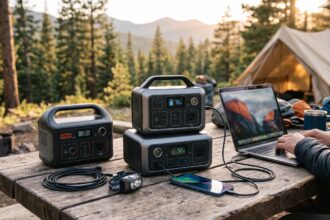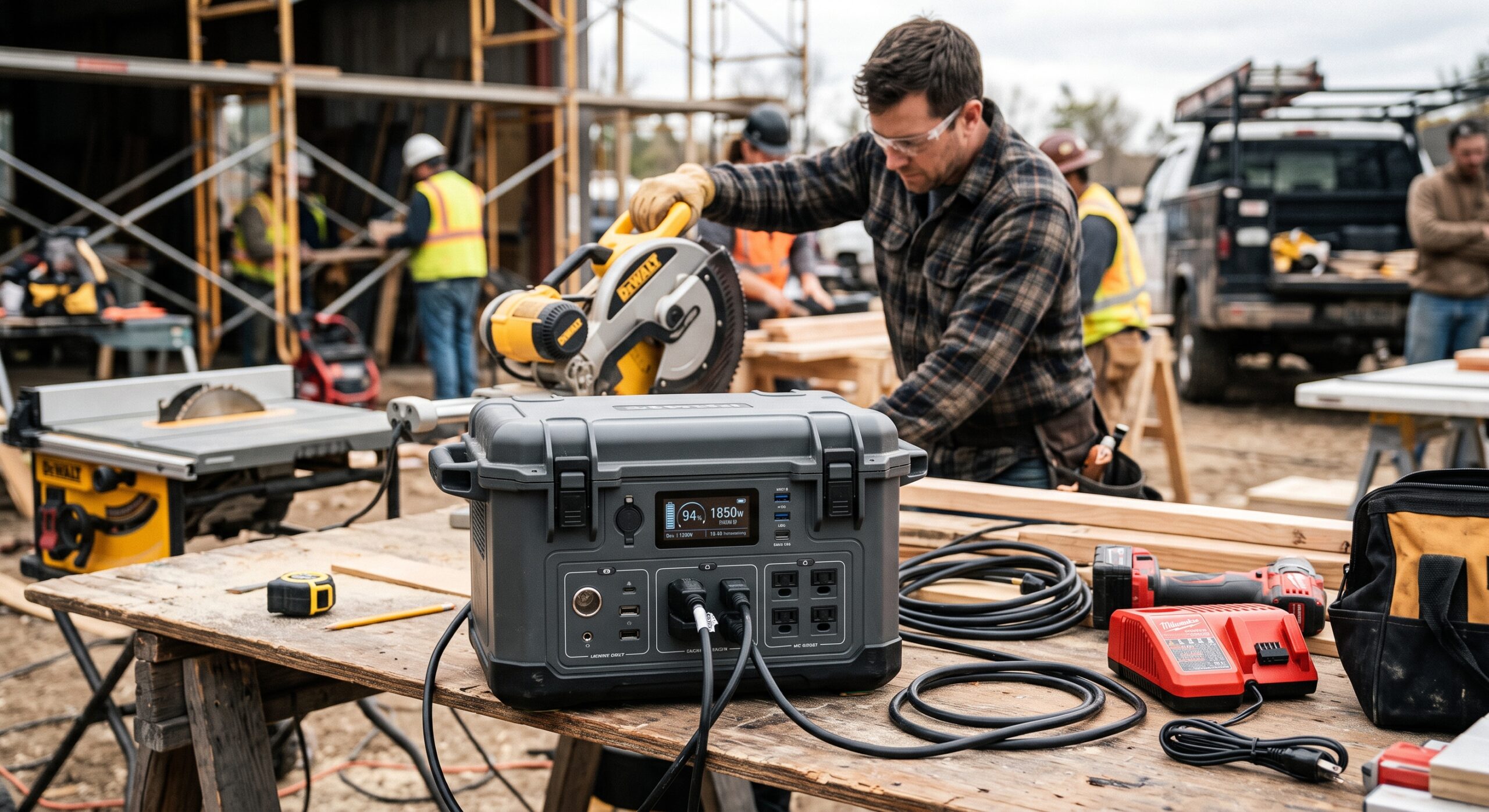
For households or setups with demanding power needs running multiple appliances, extended off-grid stays, or serious home backup capacity above 2,000Wh is often necessary. Here are the top options.
When energy requirements scale past casual camping and device charging, standard portable generators no longer suffice. Demanding scenarios—such as keeping food frozen during extended grid failures, powering critical medical gear, running well pumps, or operating high-draw induction cooktops in a campervan—require heavy-duty energy storage. Stepping into the 2,000Wh-plus category represents a fundamental transition from recreational battery boxes to true standalone microgrids. At this tier, power stations feature commercial-grade pure sine wave inverters, advanced Lithium Iron Phosphate (LiFePO4) cell arrays, high-voltage solar inputs, and modular expansion ports capable of supplying whole-home electrical panels.
Quick Comparison: Top Heavy-Duty Power Stations Over 2000Wh
| Model | Baseline Capacity | Maximum Expansion | Continuous Output | Surge Capacity | Standout Advantage |
| EcoFlow Delta Pro | 3,600Wh | Up to 25kWh (25,000Wh) | 3,600W | 7,200W | Massive single-unit capacity, EV charging station support, 240V split-phase readiness |
| Bluetti AC500 + B300S | 3,072Wh per pack | Up to 18,432Wh | 5,000W | 10,000W | Pure modular architecture, extreme inverter wattage, self-heating batteries for freezing weather |
| Bluetti AC200L (with expansion packs) | 2,048Wh | Up to 8,192Wh | 2,400W | 3,600W | Accessible entry price, compact heavy-duty footprint, fast turnaround recharging |
Top Picks
1. EcoFlow Delta Pro Best Overall
At 3,600Wh, expandable to 25kWh with additional batteries, the Delta Pro offers exceptional scalability alongside strong 3,600W continuous output.
The EcoFlow Delta Pro established a new benchmark for mobile power stations, bridging the divide between portable recreational units and permanent home energy storage systems like the Tesla Powerwall. Its integrated 3,600W pure sine wave inverter effortlessly handles high-current 120V household circuits, providing clean, stable alternating current that runs sensitive electronic equipment without harmonic distortion.
A defining benefit of the Delta Pro is its diverse recharging ecosystem. Beyond standard household wall outlets and solar panels, it is capable of drawing power directly from Level 2 Electric Vehicle (EV) charging stations across the country. By utilizing an EV charging adapter, users can pump up to 3,400W into the unit, completely refilling its substantial 3,600Wh battery in under two hours.
For homeowners, pairing two Delta Pro units together using a Double Voltage Hub creates a seamless 240V split-phase connection delivering 7,200W of continuous output. This configuration can integrate directly into a residential manual transfer switch or the EcoFlow Smart Home Panel, instantly powering central air conditioning, electric clothes dryers, and high-voltage well pumps during severe municipal blackouts. Integrated heavy-duty luggage-style wheels and an extendable handle ensure that, despite weighing nearly 100 pounds, a single person can roll the system across flat terrain.
2. Bluetti AC500 + B300S Best for Modular Growth
This system starts at 3,072Wh per battery pack and scales up to 18,432Wh, ideal for those who want to grow capacity incrementally as needs increase.
Unlike traditional all-in-one power stations that house both the electronic inverter and the battery cells within a single enclosure, the Bluetti AC500 system adopts a completely modular philosophy. The AC500 main head unit is an uncompromising 5,000W pure sine wave inverter (with an astounding 10,000W surge threshold) that contains zero internal battery storage. Instead, it connects directly to standalone B300S (3,072Wh) expansion packs.
This architectural approach solves two major problems: physical weight and financial commitment. High-capacity battery systems are exceptionally heavy; by separating the inverter from the battery banks, each individual component remains around 60 to 80 pounds, allowing transport into remote cabins, basements, or mobile job sites without heavy equipment.
The accompanying B300S battery packs feature an intelligent internal heating element. When ambient temperatures drop below freezing, the system automatically warms the cells before accepting a charge, completely eliminating the danger of cold-weather lithium plating. With the ability to link up to six B300S packs to a single AC500 head, users can start with a modest 3kWh emergency reserve and gradually scale their investment into an 18.4kWh whole-house energy system. Furthermore, the AC500 features dual independent MPPT solar charge controllers handling up to 150V and 3,000W of combined solar input, making it compatible with rigid, high-efficiency residential rooftop arrays.
3. Bluetti AC200L (with expansion packs) Best Mid-Range Heavy Duty Option
Starting at 2,048Wh and expandable, this offers a lower entry cost into the heavy-duty category while retaining room to grow.
For individuals who require heavy-duty performance but do not possess the space, budget, or need for a massive multi-battery modular system, the Bluetti AC200L delivers an optimal compromise. It serves as an accessible entry point into the heavy-duty power tier, packing an integrated 2,048Wh Lithium Iron Phosphate (LiFePO4) core alongside a robust 2,400W continuous inverter.
The AC200L is engineered with modern convenience in mind. It supports lightning-fast 2,400W AC grid charging, allowing the internal 2kWh battery to hit an 80% charge level in just 45 minutes. When off the grid, its internal MPPT controller accepts up to 1,200W of solar input across a wide 12V to 145V operating window.
When your energy demands inevitably expand, the AC200L does not become obsolete. It incorporates dedicated expansion ports that interface seamlessly with Bluetti’s auxiliary battery modules—including the B230 (2,048Wh), B300 (3,072Wh), and B300K packs—scaling the total capacity up to a maximum of 8,192Wh. With its native 48V DC expansion capabilities and dedicated RV ports (such as a 30A RV receptacle), the AC200L is widely favored by van builders and off-road camper trailer fabricators who need a reliable, self-contained powerhouse that will not overwhelm their living quarters.
Who Needs This Much Capacity?
Households running a sump pump alongside other essentials, hunting camps needing meat storage plus lighting and heating, full-time RVers with heavy daily use, or anyone wanting multiple days of home backup without daily rationing are the primary candidates for this capacity tier.
Investing in a 2,000Wh+ power station requires an honest evaluation of your daily watt-hour consumption and peak electrical draws. The following detailed operational scenarios illustrate who benefits most from this level of storage:
1. Residential Disaster Preparedness & Essential Circuit Resilience
During severe natural disasters—such as hurricanes, ice storms, or wildfire-induced grid shutdowns—a small 500Wh power station will deplete within hours. A 2,000Wh to 3,600Wh system provides meaningful security:
- Basement Flood Prevention: Sump pumps draw between 800W and 1,200W while active, with startup motor surges reaching 2,500W. Heavy-duty units absorb these high-inductive spikes effortlessly, cycling the pump throughout torrential storms to prevent thousands of dollars in water damage.
- Food Preservation: Running a modern residential French-door refrigerator (drawing 150W to 200W during compressor cycles) alongside a standalone deep freezer requires approximately 1,800Wh to 2,400Wh per 24-hour cycle. High-capacity systems preserve family food supplies indefinitely when combined with moderate daytime solar replenishment.
- Life-Sustaining Medical Hardware: Patients relying on oxygen concentrators, electric dialysis machines, or temperature-regulated medication storage cannot tolerate electrical interruptions. These systems ensure non-stop operation through multiple nights without anxiety.
2. Remote Hunting Camps, Outposts, and Off-Grid Cabins
Operating a remote wilderness cabin or seasonal basecamp without utility power presents serious logistics challenges:
- Perishable Game Storage: Preserving harvest yields in remote hunting camps requires continuous power for chest freezers, which cannot afford intermittent dropouts.
- Comfort and Illumination: Supplying perimeter LED floodlights, running small radiant space heaters or diesel heater fans, and operating water filtration pumps simultaneously requires significant energy reserves.
- Silent Operation: Unlike loud, smelly gas generators that frighten wildlife, generate noxious carbon monoxide fumes, and require constant fuel hauling, a high-capacity solar generator operates in total silence.
3. Full-Time Van Life, Overlanding, and RVing
Living on the road permanently transforms energy from a luxury into critical infrastructure:
- Sustained Daily Consumption: Full-time RV travelers power high-draw appliances daily: microwave ovens, induction cooktops, espresso machines, laptops, Starlink satellite receivers, and roof ventilation fans.
- Air Conditioning Off-Grid: Running a 13,500 BTU rooftop RV air conditioner demands approximately 1,200W to 1,500W continuously. A 2,000Wh+ battery bank provides the energy buffer required to run climate control for several hours during scorching afternoons without needing to find an RV park with shore power.
- Boondocking Autonomy: Extended boondocking in cloudy, rain-soaked regions eliminates reliable solar harvesting. A large 3,600Wh to 7,200Wh reserve allows travelers to comfortably ride out several consecutive days of foul weather without energy rationing.
Comprehensive Heavy-Duty Appliance Runtime Guide
To assist in sizing your system, the table below outlines realistic runtimes and cycle expectations when utilizing a 2,000Wh versus a 3,600Wh power station (accounting for standard 15% inverter conversion losses):
| Household / Job Site Appliance | Running Wattage | Starting Surge | Est. Runtime (2,000Wh System) | Est. Runtime (3,600Wh System) |
| Residential Sump Pump (1/2 HP) | 900W – 1,050W | 2,200W – 2,500W | ~1.6 to 1.8 Hours (Continuous run) / ~100 to 140 pump cycles | ~3.0 to 3.4 Hours (Continuous run) / ~200 to 250 pump cycles |
| Full-Size Home Refrigerator | 120W – 180W | 1,200W | 20 to 28 Hours (Cycling intermittently) | 36 to 48 Hours (Cycling intermittently) |
| Deep Chest Freezer (10 cu. ft.) | 80W – 120W | 800W | 24 to 34 Hours | 45 to 60 Hours |
| Well Water Pump (1/2 HP, 120V) | 800W – 1,200W | 2,400W – 3,000W | ~1.5 Hours total pumping time | ~2.7 Hours total pumping time |
| Window AC Unit (8,000 BTU) | 650W – 850W | 1,800W | 2.0 to 2.6 Hours continuous | 3.6 to 4.7 Hours continuous |
| Induction Cooktop (Medium-High) | 1,200W – 1,800W | None | ~1.0 to 1.4 Hours total cook time | ~1.7 to 2.5 Hours total cook time |
| Microwave Oven (1,000W cooking) | 1,400W – 1,600W | None | ~1.1 to 1.2 Hours cumulative run | ~1.9 to 2.2 Hours cumulative run |
| Medical CPAP Machine (Full heat/humidity) | 80W – 110W | None | 16 to 21 Hours (2 to 3 nights) | 28 to 38 Hours (4 to 5 nights) |
| Starlink Standard Satellite Dish | 50W – 75W | None | 23 to 34 Hours continuous | 41 to 61 Hours continuous |
| Corded Contractor Table Saw | 1,500W – 1,800W | 3,000W | ~1.0 Hour continuous cutting time | ~1.7 Hours continuous cutting time |
Critical Technical Considerations for Systems Over 2000Wh
Before purchasing a system in this heavyweight category, several foundational electrical parameters must be understood to ensure seamless operation:
1. Inverter Capabilities: Continuous vs. Surge Ratings
Never evaluate a system purely on its capacity in Watt-hours (Wh). A battery could hold 5,000Wh of energy, but if its inverter is only rated for 1,500W, it cannot operate an electric clothes dryer or a heavy chop saw.
- Continuous Output: The steady power the unit delivers indefinitely without overheating its internal transformers.
- Surge Headroom: Electric motors require a momentary jolt of energy (often double or triple their continuous draw) to spin up from a dead stop. Ensure your system’s surge rating accommodates the highest inductive load on your equipment list.
2. 120V Single-Phase vs. 240V Split-Phase Output
Standard American household outlets operate on 120V. However, high-draw home appliances—including central air handlers, electric water heaters, well pumps, and electric ovens—operate on 240V split-phase power.
- Standalone units like the Bluetti AC200L output strictly 120V.
- Advanced modular systems like the EcoFlow Delta Pro or Bluetti AC500 allow you to couple two identical units together via dedicated communication cables to deliver native 240V split-phase power, making them true whole-house backup solutions.
3. Solar Charging Input Windows and Wire Sizing
Recharging a 3,000Wh+ battery requires serious solar capacity. If you pair a 3,000Wh power station with a modest 200W portable folding panel, it will take over two full sunny days to replenish.
- Look for solar input limits of 1,000W to 3,000W.
- Verify the maximum Open Circuit Voltage (Voc) threshold. Systems supporting up to 150V allow you to wire multiple rigid residential panels in series. Wiring in series boosts voltage while keeping amperage low, which minimizes resistance losses and allows you to utilize thinner, more manageable wiring runs over longer distances.
4. Grid Connection Architecture
If you intend to use a 2,000Wh+ generator for residential emergency backup, avoid running extension cords across your living room floor. Instead, consult a certified electrician to install one of the following:
- Manual Transfer Switch: A dedicated sub-panel connected directly to 6–10 critical household circuits (refrigerator, furnace blower, sump pump, lights). When grid power cuts out, you flip a switch, plug a single heavy-duty cable into your power station, and power your house cleanly.
- Smart Electrical Panel: Advanced digital panels (such as the EcoFlow Smart Home Panel) switch over automatically in under 20 milliseconds during a blackout, seamlessly shedding non-essential circuits to maximize battery life.
Essential Storage, Maintenance, and Cold-Weather Protocols
To safeguard an investment of this scale, observe these fundamental operational rules:
- Strict Temperature Management: While LiFePO4 cells safely discharge down to -4°F (-20°C), charging them below 32°F (0°C) permanently degrades the battery core through lithium metal plating. If operating in freezing winter conditions, choose units with built-in heating elements (like the Bluetti B300S) or store the power station in an insulated, climate-controlled space.
- Long-Term Storage Charge Levels: When storing your generator during seasons of non-use, maintain the state of charge between 50% and 70%. Never leave high-capacity batteries parked at 100% indefinitely, and never allow them to sit completely depleted at 0%, as deep discharge can trigger the internal Battery Management System (BMS) into a permanent lock-out sleep state.
- Periodic BMS Recalibration: Every four to six months, perform a full recalibration cycle: run the unit down to 0% until it shuts down automatically, then charge it undisturbed via AC wall power to 100%. This re-indexes the internal coulomb counter, ensuring that on-screen percentage readouts and remaining runtime projections remain pinpoint accurate.
Bottom Line
The EcoFlow Delta Pro offers the best balance of capacity, output, and expandability for most heavy-duty applications, while Bluetti’s modular AC500 system is worth considering for those who want to scale capacity gradually rather than committing to maximum capacity upfront.
Investing in a power station above 2,000Wh provides the operational independence needed to survive severe winter weather, navigate unpredictable off-grid journeys, and maintain demanding work sites without relying on traditional fossil fuel generators. By matching your daily energy usage to the appropriate inverter surge capacity, prioritizing modular expandability, and installing dedicated solar arrays, you can establish an enduring, self-sustaining energy reserve that delivers dependable power whenever and wherever it is needed.