Solar panels are low-maintenance compared to most electrical equipment, but a few simple habits make a measurable difference in how much charging power they actually deliver over their lifespan. Here’s what genuinely matters.
Keep Panels Clean
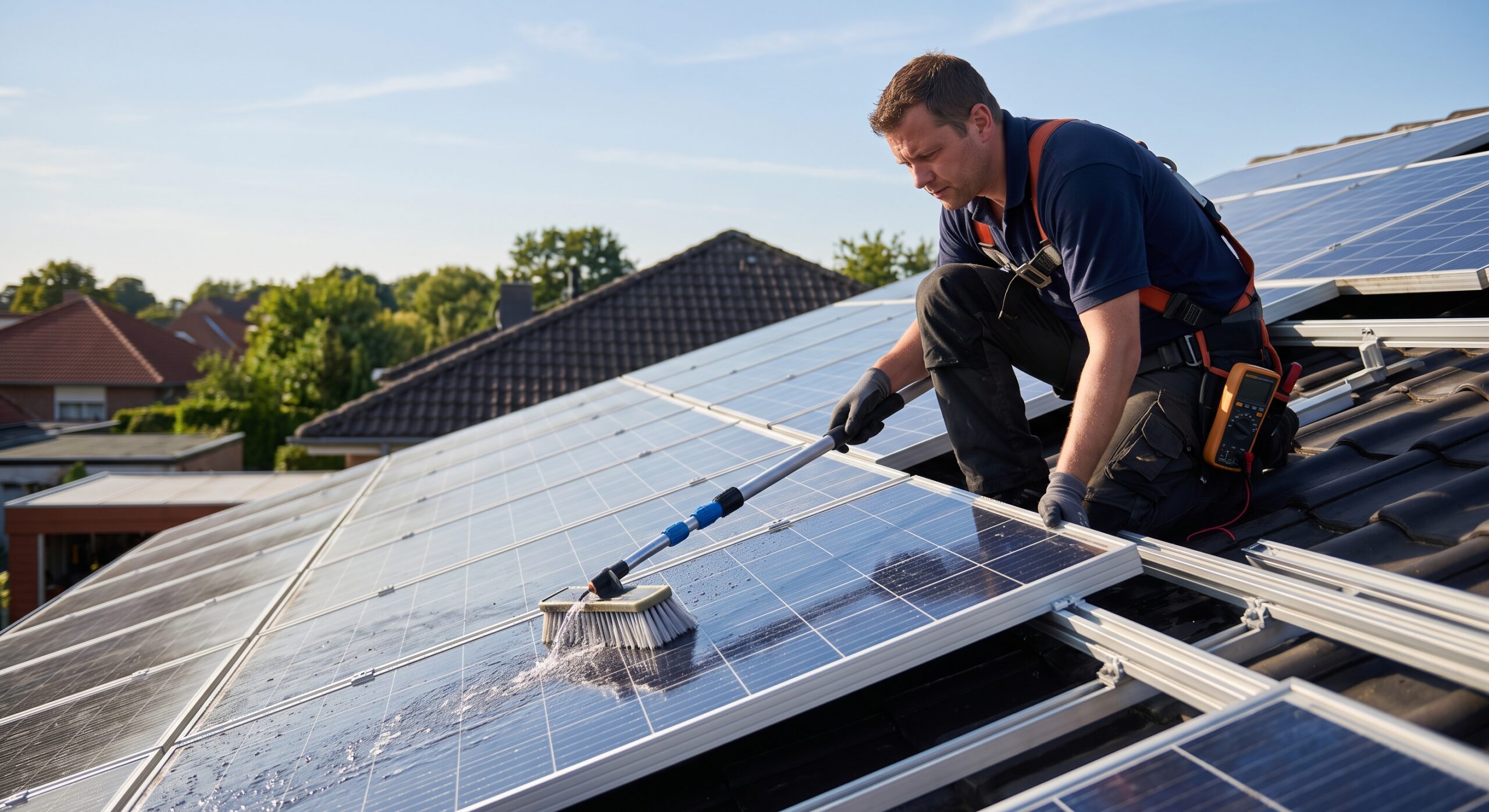
Dust, dirt, pollen, and grime accumulated during camping or outdoor storage can reduce charging efficiency by a meaningful margin sometimes 10-20% or more in dusty environments. Wiping panels down with a soft cloth and water (avoiding harsh chemicals that could damage the surface coating) before each significant use keeps them performing close to their rated output.
Beyond the basic wipe-down, it is critical to understand how different types of debris affect solar generation. Because solar cells are often wired in series, a single opaque obstruction—like a bird dropping or a thick patch of tree sap—can act as a hard bottleneck for the entire panel, disproportionately slashing your energy yield. When camping under pine trees, check your panels daily for sap. If sap hardens, it becomes incredibly difficult to remove without scratching the ETFE or PET surface coating of a portable panel.
For stubborn grime, use a mixture of distilled water and a highly diluted, mild dish soap. Distilled water is highly recommended over standard tap water, particularly in areas with hard water, because tap water leaves behind microscopic calcium and magnesium mineral deposits when it evaporates. Over time, these mineral spots create a hazy film across the panel that permanently diffuses incoming sunlight, dropping your peak efficiency. Never use abrasive sponges, bleach, or ammonia-based glass cleaners, as these will strip the anti-reflective coating applied to high-end solar panels.
Store Panels Properly Between Uses
- Avoid folding or storing panels while still wet, which can promote moisture buildup inside the folded panel over time.
- Store in a moderate temperature environment rather than a hot car trunk for extended periods, since extreme heat can accelerate wear on the panel’s internal components over years of use.
- Avoid unnecessary flexing or bending beyond the panel’s designed folding points, which can stress internal connections.
Improper storage is the silent killer of portable solar generators. When moisture is trapped inside a folded fabric-backed panel, it doesn’t just invite mold and mildew; it can lead to delamination. Delamination occurs when the layers of the solar panel begin to separate, allowing water vapor to reach the internal copper wiring and silicon cells, eventually leading to terminal corrosion. Always let your panels air-dry completely in the sun or a well-ventilated room before packing them away.
Temperature fluctuations also play a massive role in longevity. Storing a solar panel in a freezing garage during winter and then moving it directly into a hot environment can cause the internal materials to expand and contract at different rates. This thermal cycling weakens the microscopic solder joints connecting the solar cells. Finding a climate-controlled closet inside your home is the ideal storage solution.
Recommended Solar Panel Maintenance Schedule
| Maintenance Task | Frequency | Focus Area |
| Light Dusting/Wipe Down | Before every trip | Panel surface, removing loose dirt and pollen |
| Deep Cleaning | Bi-monthly (if used heavily) | Removing sap, bird droppings, and hard water stains |
| Cable & Port Inspection | Monthly | Checking for MC4 O-ring degradation and cable fraying |
| Output Baseline Test | Every 6 months | Comparing peak wattage against original specs under clear skies |
Inspect Cables and Connectors Periodically
- Check for fraying, corrosion, or damage on cables and connectors, especially after trips involving rough handling or exposure to moisture.
- Keep connectors clean and dry before connecting, since dirt or moisture in a connector can reduce charging efficiency or, in worse cases, cause a poor connection.
The MC4 connectors standard on most solar panels rely on a small internal rubber O-ring to maintain their IP67 waterproof rating. UV exposure and frequent plugging/unplugging can cause these O-rings to dry out and crack. If you notice the connection feels loose or lacks that definitive “click,” inspect the housing immediately. A compromised seal allows morning dew to seep into the metal contacts, leading to galvanic corrosion.
Furthermore, pay close attention to the junction box—the small plastic square where the cables physically exit the back of the solar panel. This is a high-stress point. If you routinely carry your panels by their cables or let the heavy extension cords hang unsupported from the junction box, the internal soldering will eventually rip. To prevent this, always leave a small slack loop when routing your cables, and never pull the cords taut against the panel’s backing. If you operate in highly humid or coastal environments where salt air is a factor, applying a tiny dab of dielectric grease to the metal terminals of your connectors can completely prevent saltwater corrosion.
Avoid Physical Damage
- Don’t step on or place heavy objects on panels, even briefly, since internal cell damage isn’t always visible from the outside but can meaningfully reduce output.
- Use a protective case or bag during transport if your panel didn’t come with one, particularly for trips involving vehicles where panels might shift or be crushed by other gear.
Silicon solar cells are essentially wafers of highly conductive glass. While the outer laminate is designed to withstand hail and minor impacts, the cells underneath are incredibly brittle. Placing a heavy cooler on top of a folded solar panel in the back of your truck will cause what the industry calls “micro-cracks.” These microscopic fractures in the silicon are entirely invisible to the naked eye, but they sever the conductive pathways that electrons use to flow. A panel suffering from severe micro-cracking might look brand new on the outside but will generate only a fraction of its rated power.
Another major hazard is thermal shock. If your panels have been baking in the midday sun and are hot to the touch, do not spray them down with freezing cold water from a hose to clean them. The rapid temperature change can shatter the cells instantly. Always clean your panels in the early morning or late evening when the ambient temperature is cool.
Finally, wind is a persistent threat to portable panels. A sudden gust can easily catch a 200W foldable panel like a sail, flipping it over and smashing it against rocks or your vehicle. Always utilize the built-in grommets to stake your panels to the ground using standard tent pegs, or use paracord to tether them securely to your vehicle’s wheels or roof rack during breezy days.
Monitor Performance Over Time
Periodically comparing actual charging output (visible on most power stations’ displays) against expected output for given sun conditions can help catch a gradual efficiency decline early, whether from accumulated dust, minor damage, or normal panel aging.
To effectively monitor performance, you must establish a baseline. The day you buy your solar panel, take it out on a perfectly clear, cloudless day at solar noon (when the sun is highest in the sky). Angle it perfectly perpendicular to the sun and plug it into your power station. Record the maximum wattage input you achieve. This is your personal baseline—it will almost never match the laboratory spec sheet exactly, but it tells you what your specific panel and power station combo is capable of in the real world.
Every six months, repeat this exact test under similar weather conditions. If your baseline was 160W and it suddenly drops to 110W six months later despite perfectly clear skies, you know it is time to troubleshoot.
Quick Troubleshooting Matrix for Low Output
| Symptom / Issue | Probable Cause | Action to Take |
| Sudden massive drop in wattage (e.g., 50% loss) | Hard shading on one section, or a severe micro-crack | Check for physical obstructions (leaves, sap). Inspect for visible damage. |
| Slow, gradual decline in output over months | Mineral buildup, dust, or standard UV degradation | Perform a deep clean with distilled water and mild soap. |
| Output fluctuates wildly (e.g., bouncing from 10W to 100W) | Loose connection, damaged MC4 terminal, or MPPT recalibration | Check all cable connections. Listen for electrical arcing at the junction box. |
| Zero output despite full sun | Tripped power station BMS, blown inline fuse, or severed wire | Check power station input limits. Test the cable continuity with a multimeter. |
If you own a digital multimeter, learning to test the Open Circuit Voltage (Voc) and Short Circuit Current (Isc) directly from the panel’s cables is an invaluable skill. This allows you to isolate the problem: if the panel outputs the correct voltage on the multimeter but your power station isn’t charging, you know the panel is perfectly fine and the issue lies within the power station’s charge controller or an adapter cable.
Bottom Line
Solar panel maintenance is mostly about simple, consistent habits keeping panels clean, storing them properly, and avoiding unnecessary physical stress rather than any complex technical upkeep. These small habits, maintained consistently over a panel’s lifespan, are the difference between a panel that performs close to its rated output for years and one that gradually underperforms without an obvious cause.
Ultimately, treating your solar panels with the same level of care that you apply to your expensive electronics, cameras, or vehicle engines will yield massive dividends. By proactively managing dust, properly storing the equipment away from extreme heat and moisture, and actively monitoring the charging data on your power station, you guarantee that your off-grid power supply remains dependable for thousands of charging cycles.