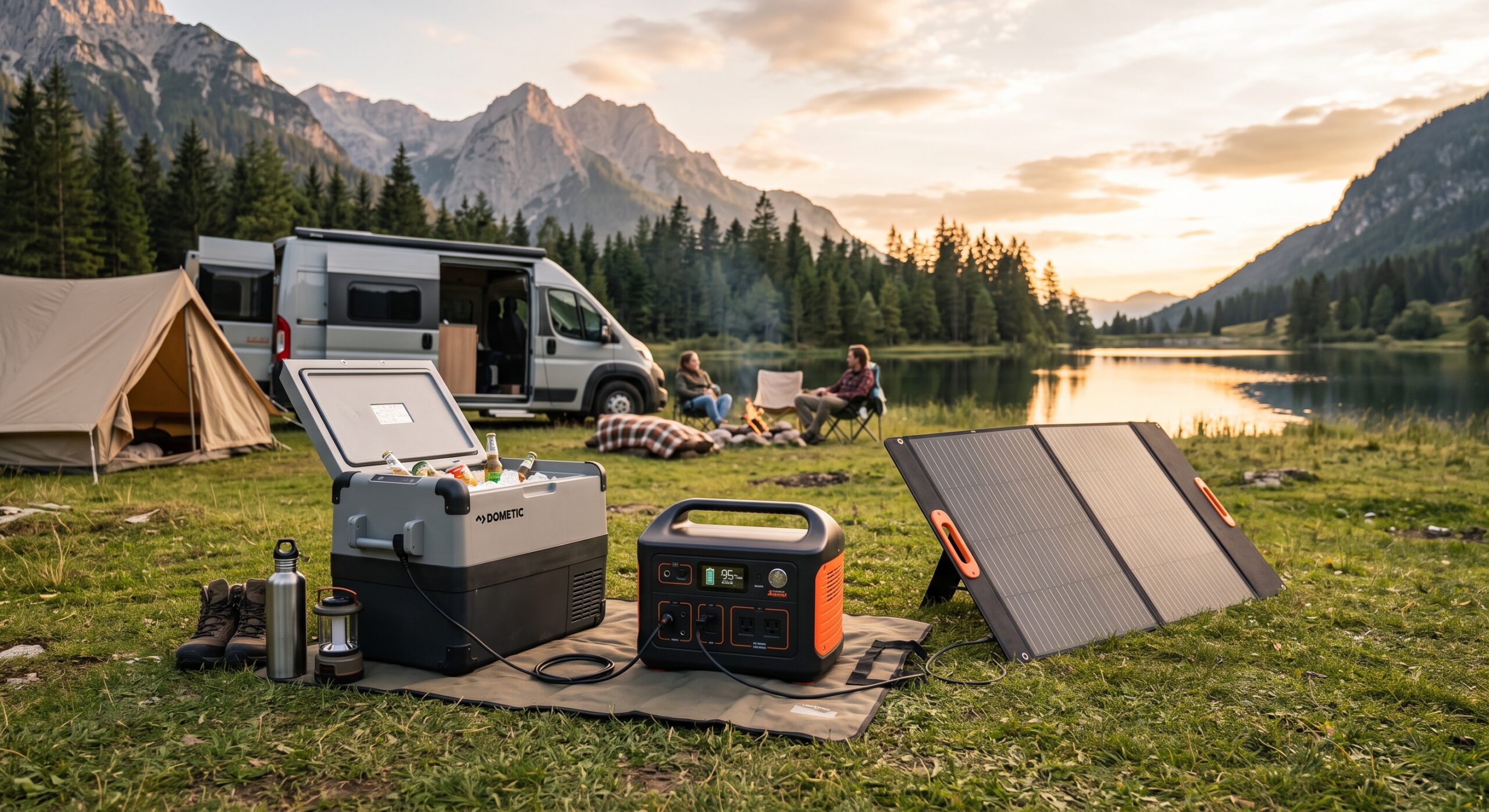
A 12V camping fridge is one of the most transformative pieces of gear for anyone who camps regularly — no more soggy ice, no more warm drinks by day two. But running one off a solar generator (a portable power station paired with solar panels) requires understanding how much power it actually draws and how to keep it running across a multi-day trip without running out of charge. Here’s how to set it up correctly.
How Much Power Does a Camping Fridge Actually Use?
Camping fridges (also called 12V fridges or portable compressor fridges) don’t run continuously — like a home refrigerator, the compressor cycles on and off to maintain temperature. Actual power draw depends on size, ambient temperature, and how often the lid is opened.
| Fridge Size | Running Watts (compressor on) | Typical Daily Use |
|---|---|---|
| Small (15-25L) | 30-45W | 200-350Wh/day |
| Medium (35-50L) | 40-55W | 350-500Wh/day |
| Large (50-75L) | 45-65W | 450-650Wh/day |
These figures assume moderate ambient temperatures (70-85°F). Hot weather, frequent lid opening, or setting the fridge to a colder temperature all increase actual power draw, sometimes significantly.
Sizing Your Solar Generator Setup
Step 1: Estimate Daily Fridge Usage
Using the table above, a medium 40L fridge in warm weather might use around 450Wh per day. This becomes your baseline for how much capacity and solar recharging you need.
Step 2: Add Other Loads
If you’re also charging phones, running lighting, or powering a fan, add those watt-hours on top. A realistic combined daily total for a fridge plus basic extras often falls in the 500-700Wh/day range.
Step 3: Choose Power Station Capacity
For trips without daily solar recharge, multiply your daily use by the number of days you’ll be off-grid. For trips relying on solar to recharge daily, you mainly need enough capacity to buffer through the fridge’s overnight compressor cycles and any cloudy stretches — a 500-800Wh power station is often sufficient if solar input is reliable.
Step 4: Match Solar Panel Wattage to Recharge Needs
As a rough guide, a 100W solar panel produces roughly 300-400Wh on a good sunny day (accounting for angle, cloud cover, and panel efficiency losses — actual rated wattage rarely translates 1:1 into real-world charging). To fully offset a 450-500Wh/day fridge, a 150-200W solar panel setup is a realistic target for most trips.
Setting Up the System
- Connect the fridge directly to the power station’s AC outlet or 12V port, depending on which the fridge uses — check the fridge’s power cord and manual to confirm.
- Position solar panels for maximum sun exposure, ideally facing south (in the northern hemisphere) and angled toward the sun rather than laid flat.
- Charge during the day, run the fridge continuously — the compressor cycles on its own schedule regardless of whether you’re actively charging, so there’s no need to manually manage this beyond keeping panels positioned well.
- Monitor charge level via the power station’s display or app, especially on the first day of a trip, to confirm your real-world numbers roughly match your estimates before you’re relying on them for a week-long trip.
Common Mistakes That Drain Capacity Faster Than Expected
- Setting the fridge colder than necessary. Each few degrees colder can meaningfully increase compressor run time and power draw — set it only as cold as your food actually requires.
- Opening the lid frequently. Every opening lets cold air escape, forcing the compressor to work harder to recover. Packing the fridge thoughtfully (grouping items you’ll need together) reduces how often and how long it stays open.
- Placing the fridge in direct sun or a hot car trunk. Ambient heat around the fridge forces the compressor to work significantly harder — shade matters more than people expect.
- Underestimating hot-weather draw. The wattage figures above assume moderate temperatures; a fridge working against 95°F+ ambient heat can draw noticeably more power than its rated average.
What to Do If You’re Running Low on Charge
- Move the power station and panels to a sunnier spot if trees or terrain are shading your setup during peak sun hours.
- Temporarily raise the fridge’s target temperature slightly (a few degrees) to reduce compressor run time until you’ve recharged more.
- Reduce other loads (stop charging phones, turn off lighting) to prioritize the fridge if capacity is genuinely tight.
- Use a vehicle as a backup recharge source if you’re camping near your car and solar isn’t keeping up, though this is slower than a wall charge and uses fuel.
Bottom Line
A camping fridge is a manageable, predictable load for a solar generator setup once you know its real-world wattage — typically 30-65W depending on size, translating to 300-650Wh per day. Matching a power station’s capacity to your trip length, and pairing it with enough solar wattage (roughly 150-200W for a medium fridge) to offset daily use, is usually enough to run a camping fridge indefinitely on a multi-day trip, as long as panels are positioned well and the fridge isn’t working against unnecessary heat or frequent lid openings.