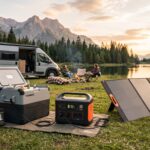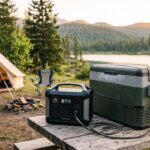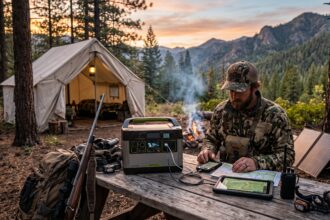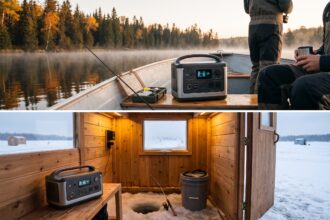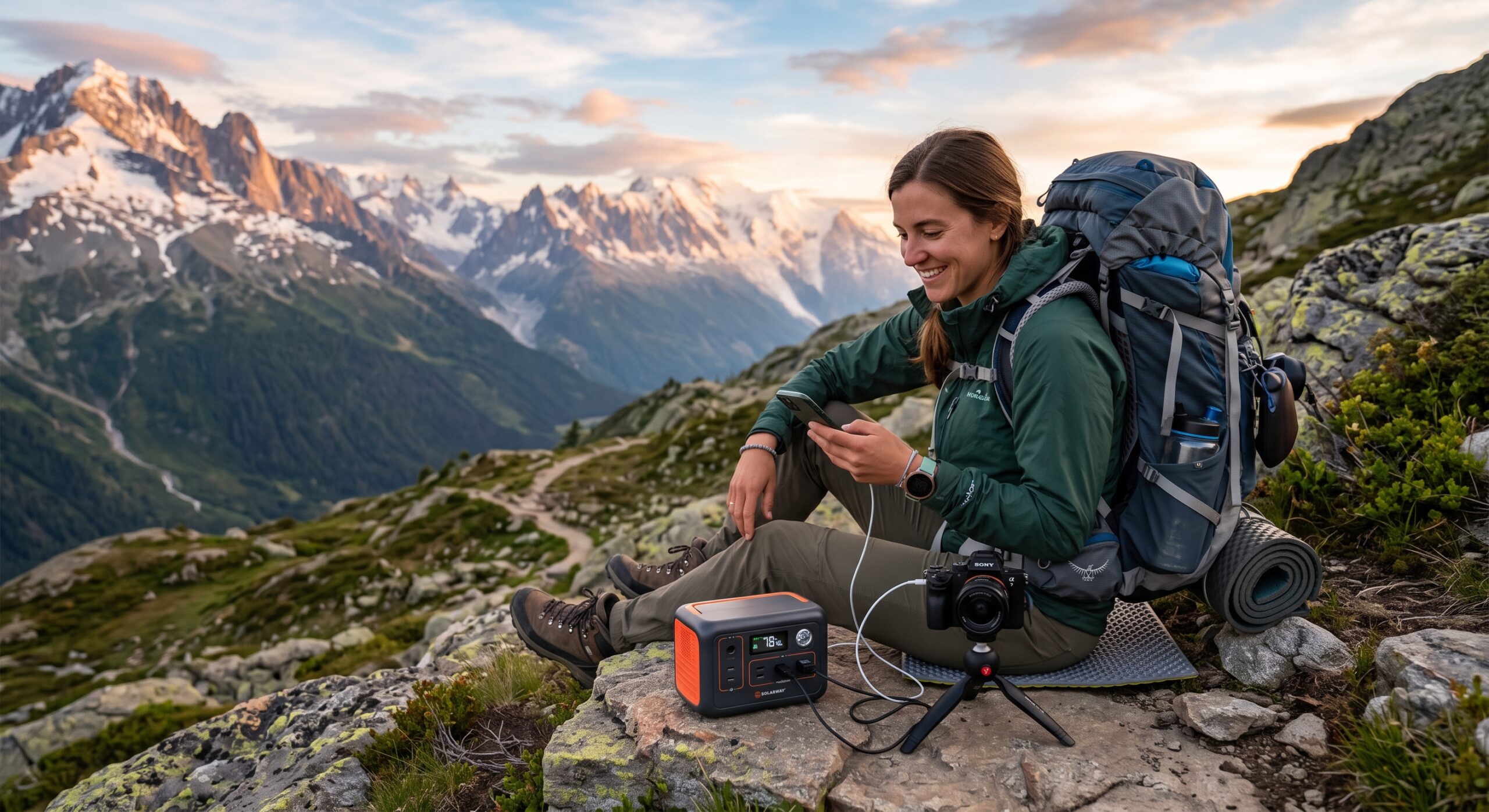
Backpacking puts a different set of constraints on a power station than car camping does. Every ounce matters when it’s on your back for miles, so the calculus shifts heavily toward weight and size, even if that means sacrificing some capacity and output compared to what you’d bring on a car camping trip. This guide covers the best lightweight power stations for backpacking, along with realistic expectations for what you can and can’t run with one.
Quick Answer: Our Top Picks
- Best Overall for Backpacking: Anker Solix C300 — light, compact, and genuinely useful capacity
- Lightest Practical Option: BioLite Charge 80 — built specifically for ultralight backpacking
- Best Balance of Weight and Capacity: EcoFlow River 2 — slightly heavier but more versatile
- Best for Multi-Day Solo Trips: Jackery Explorer 300 v2 — a bit heavier, but worth it for longer trips alone
What Actually Matters for Backpacking (Different From Camping)
- Weight per watt-hour. This is the single most important spec for backpacking — a heavier unit with more capacity often isn’t worth the extra pounds if you’re carrying it miles into the backcountry.
- Realistic use case. Backpacking power needs are almost always about phone charging, a headlamp, a GPS device, or occasionally a satellite communicator — not a fridge or lighting for a whole campsite.
- Solar compatibility with lightweight panels. Pairing with a foldable, backpacking-specific solar panel (rather than a heavier camping panel) matters more here than for car camping.
- Durability against drops and moisture. Backpacking gear takes more abuse than car camping gear, so a rugged build matters more.
Do You Even Need a Power Station for Backpacking?
Before buying, it’s worth being honest about whether a full power station is the right tool. For trips of 1-3 nights focused only on charging a phone and a headlamp, a simple 10,000-20,000mAh USB power bank (weighing just a few ounces) is often lighter and more efficient than even the lightest power station. A dedicated power station becomes worth the extra weight when you need to charge multiple devices repeatedly, run something with an AC plug, or are out for longer stretches without any recharge opportunity.
Top Lightweight Power Stations for Backpacking
1. Anker Solix C300 — Best Overall
At roughly 7 lbs and 288Wh, the Solix C300 sits at a genuinely useful capacity point without becoming a burden on the trail. It can recharge a phone dozens of times, run a headlamp or small lantern for many nights, and still handle an occasional higher-draw device like a camera battery charger — all while remaining reasonable to carry for multi-day trips.
Best for: Backpackers who want real capacity without stepping into car-camping-weight territory.
2. BioLite Charge 80 — Lightest Practical Option
Built specifically with backpacking in mind, the Charge 80 weighs a little over 1 lb while still offering meaningful capacity (around 80Wh) for phone and small device charging. It won’t run AC-powered devices, but for backpackers whose only real need is keeping a phone, headlamp, and maybe a GPS unit charged, this is about as light as a dedicated power station gets.
Best for: Ultralight backpackers who only need device charging, not AC output.
3. EcoFlow River 2 — Best Balance of Weight and Capacity
At around 7.7 lbs and 256Wh (with X-Boost allowing brief higher-wattage device use), the River 2 offers a bit more flexibility than ultralight-focused units, including a full AC outlet for devices that need standard wall-style power. The tradeoff is a small amount of extra weight compared to the absolute lightest options.
Best for: Backpackers who want the option of AC output (for a camera charger, small electronics) without jumping to a heavier camping-focused unit.
4. Jackery Explorer 300 v2 — Best for Multi-Day Solo Trips
At around 7.5 lbs and 300Wh, the Explorer 300 v2 offers slightly more capacity than the lighter options, which matters on longer solo trips where recharge opportunities (a car, a hut with power) may be days apart. The extra capacity comes at a small weight cost, but for trips of 4+ nights, that tradeoff is often worth it.
Best for: Longer solo backpacking trips with no recharge access along the way.
Comparison Table
| Model | Weight | Capacity | AC Output | Best For |
|---|---|---|---|---|
| Anker Solix C300 | ~7 lbs | ~288Wh | Yes | Best all-around balance |
| BioLite Charge 80 | ~1.1 lbs | ~80Wh | No | Absolute lightest option |
| EcoFlow River 2 | ~7.7 lbs | ~256Wh | Yes | AC output with reasonable weight |
| Jackery Explorer 300 v2 | ~7.5 lbs | ~300Wh | Yes | Longer solo trips |
Realistic Expectations: What Can You Actually Charge?
A 250-300Wh backpacking power station can typically provide:
- 8-15 full phone charges (phones use roughly 15-20Wh per full charge)
- 20-40+ hours of headlamp or small lantern use
- 3-6 full charges of a GPS device or satellite communicator
- 1-2 charges of a camera battery, depending on camera type
This is enough for most multi-day trips focused on communication, navigation, and lighting — not for running anything resembling home appliances.
Tips for Maximizing Backpacking Battery Life
- Turn off devices instead of leaving them in standby, since even idle electronics slowly drain a charge over multiple days.
- Pair with a lightweight foldable solar panel (20-60W) if you’re out for more than 4-5 days, to extend capacity without adding much weight.
- Charge everything to 100% before you leave, and top off any device with a partial charge remaining, rather than starting a trip with a device already partially depleted.
- Prioritize essential devices (phone for emergency use, headlamp, GPS/satellite communicator) over convenience items if capacity runs low.
Bottom Line
For most backpackers, the Anker Solix C300 offers the best real-world balance of weight and usable capacity, covering phone charging, lighting, and the occasional AC-powered device without becoming a burden on the trail. Ultralight-focused hikers who only need to keep a phone and headlamp charged should look at the BioLite Charge 80, while those on longer solo trips without recharge access may find the extra capacity of the Jackery Explorer 300 v2 worth the small additional weight.