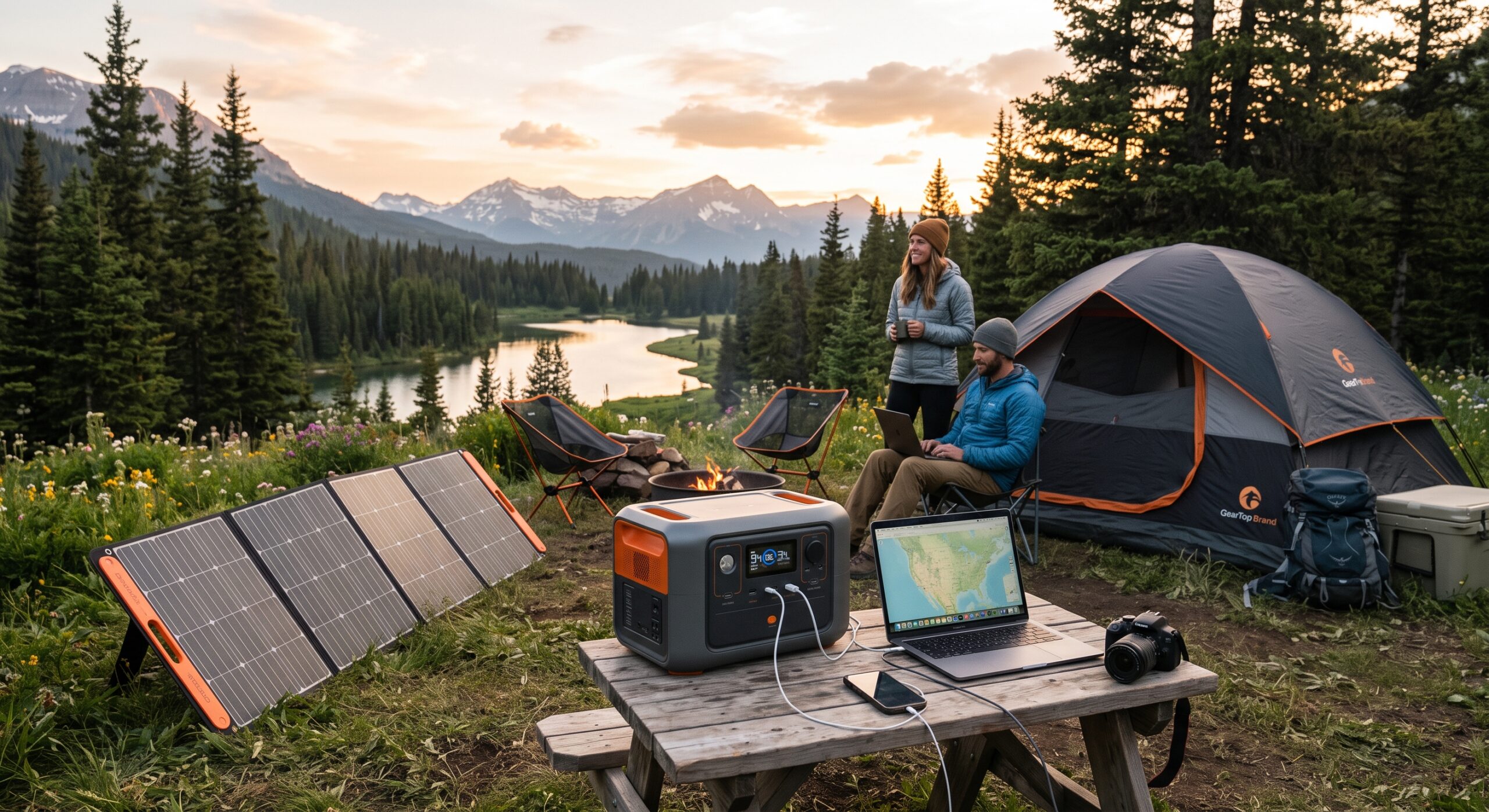
Camping power needs are different from home backup needs in a few important ways: weight and portability matter as much as capacity, solar charging is often the primary recharge method rather than a backup plan, and the loads tend to be lighter overall (lighting, a camp fridge, device charging) rather than heavy appliances. This guide covers the best portable power stations for camping in 2026, based on portability, output, and real-world charging performance in the field.
Quick Answer: Our Top Picks
- Best Overall for Camping: Jackery Explorer 1000 v2 — strong balance of capacity, weight, and price
- Best Ultra-Portable: Anker Solix C300 — light enough for regular car camping trips
- Best for Solar Charging: EcoFlow River 2 Pro — fast, efficient solar input for off-grid trips
- Best for Extended Trips: Bluetti AC180 — larger capacity without becoming impractical to carry
- Best Budget Pick: Jackery Explorer 300 v2 — solid basics for weekend trips
What Matters Most for Camping (Different From Home Backup)
- Weight and size. A unit that’s perfect for a garage shelf can be a burden on a camping trip, especially if you’re carrying gear any distance from the car.
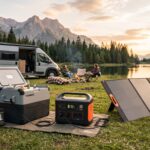
- Solar charging efficiency. Unlike home backup, where solar is a backup option, camping often relies on solar as the primary recharge method across a multi-day trip.
- Durability. Dust, minor bumps, and temperature swings are more of a factor outdoors than in a climate-controlled home.
- Port variety for outdoor gear. Look for 12V car-style ports (useful for camp fridges and lanterns designed for vehicles) alongside standard AC outlets and USB ports.
Top Portable Power Stations for Camping
1. Jackery Explorer 1000 v2 — Best Overall
At around 1,000Wh capacity and roughly 14 lbs, the Explorer 1000 v2 hits the sweet spot for most camping trips: enough capacity to run a camp fridge, lighting, and device charging for a full weekend, without being too heavy to move between the car and the campsite. Fast recharge time (about 2 hours from a wall outlet before you leave home) also makes it easy to top off the night before a trip.
Best for: Weekend and week-long car camping trips where a fridge and basic comforts matter.
2. Anker Solix C300 — Best Ultra-Portable
For camping trips where every pound matters — backpacking-adjacent trips, kayak camping, or just minimizing gear — the Solix C300’s compact size and roughly 288Wh capacity covers lighting, phone/device charging, and short use of small electronics without adding significant bulk to your pack.
Best for: Lightweight trips where camp fridge use isn’t the priority, just lighting and devices.
3. EcoFlow River 2 Pro — Best for Solar Charging
The River 2 Pro is built to pair efficiently with solar panels, with fast solar input speeds that make a real difference on multi-day trips without wall access. Its 768Wh capacity, combined with a 220W solar panel, can often fully recharge in a single day of good sun — a meaningful advantage for longer off-grid stays.
Best for: Off-grid or multi-day trips where solar is your only realistic recharge method.
4. Bluetti AC180 — Best for Extended Trips
At 1,152Wh with a manageable weight for its capacity class, the AC180 is a good choice for longer trips (a week or more) or larger groups where more devices, lighting, and a fridge need to run simultaneously without draining the unit too quickly.
Best for: Group camping trips or extended stays where capacity matters more than ultra-light portability.
5. Jackery Explorer 300 v2 — Best Budget Pick
Not every camping trip needs a large unit. For weekend trips focused on lighting, phone charging, and maybe a small fan or speaker, the Explorer 300 v2 covers the basics at a lower price point, without the bulk of a larger system.
Best for: Casual campers who don’t need to run a fridge and want to keep costs and weight down.
Comparison Table
| Model | Capacity | Weight | Continuous Output | Best For |
|---|---|---|---|---|
| Jackery Explorer 1000 v2 | ~1,000Wh | ~14 lbs | 1,000W | Weekend trips with a camp fridge |
| Anker Solix C300 | ~288Wh | ~7 lbs | 300W | Ultra-light, minimal gear trips |
| EcoFlow River 2 Pro | ~768Wh | ~16 lbs | 800W | Solar-dependent, off-grid trips |
| Bluetti AC180 | ~1,152Wh | ~17 lbs | 1,800W | Group or extended trips |
| Jackery Explorer 300 v2 | ~300Wh | ~7 lbs | 300W | Budget, basics-only camping |
How to Size Your Power Station for a Camping Trip
- List what you’ll actually run: typically a camp fridge (40-60W), lighting, phone/camera charging, and maybe a fan or small speaker.
- Estimate daily watt-hour use. A camp fridge alone might use 400-600Wh per day; add 100-200Wh for lighting and device charging, giving a realistic daily total of 500-800Wh for a well-equipped trip.
- Multiply by the number of days you’ll be off-grid without a recharge opportunity, then add a buffer of 20-30% for cloudy days or unexpectedly higher use.
- Match this to a unit’s capacity, keeping solar recharge speed in mind if you’re relying on the sun to extend a multi-day trip.
Solar Charging Tips for Camping
- Set panels up in the morning and reposition periodically to track the sun, rather than leaving them flat and stationary all day.
- Angle panels toward the sun rather than laying them flat on the ground — even a rough angle adjustment can meaningfully improve charging speed.
- Keep panels clean of dust and dirt, which can reduce charging efficiency more than people expect in dry, dusty camping environments.
- Charge during the day, use at night — running high-draw devices while also trying to charge from solar slows down the net recharge rate.
Bottom Line
For most camping trips, the Jackery Explorer 1000 v2 offers the best overall balance of capacity, weight, and price, comfortably covering a camp fridge and basic comforts for a weekend. Lightweight-focused campers should look at the Anker Solix C300, while anyone planning extended, solar-dependent trips will get the most consistent performance from the EcoFlow River 2 Pro’s efficient solar charging setup.