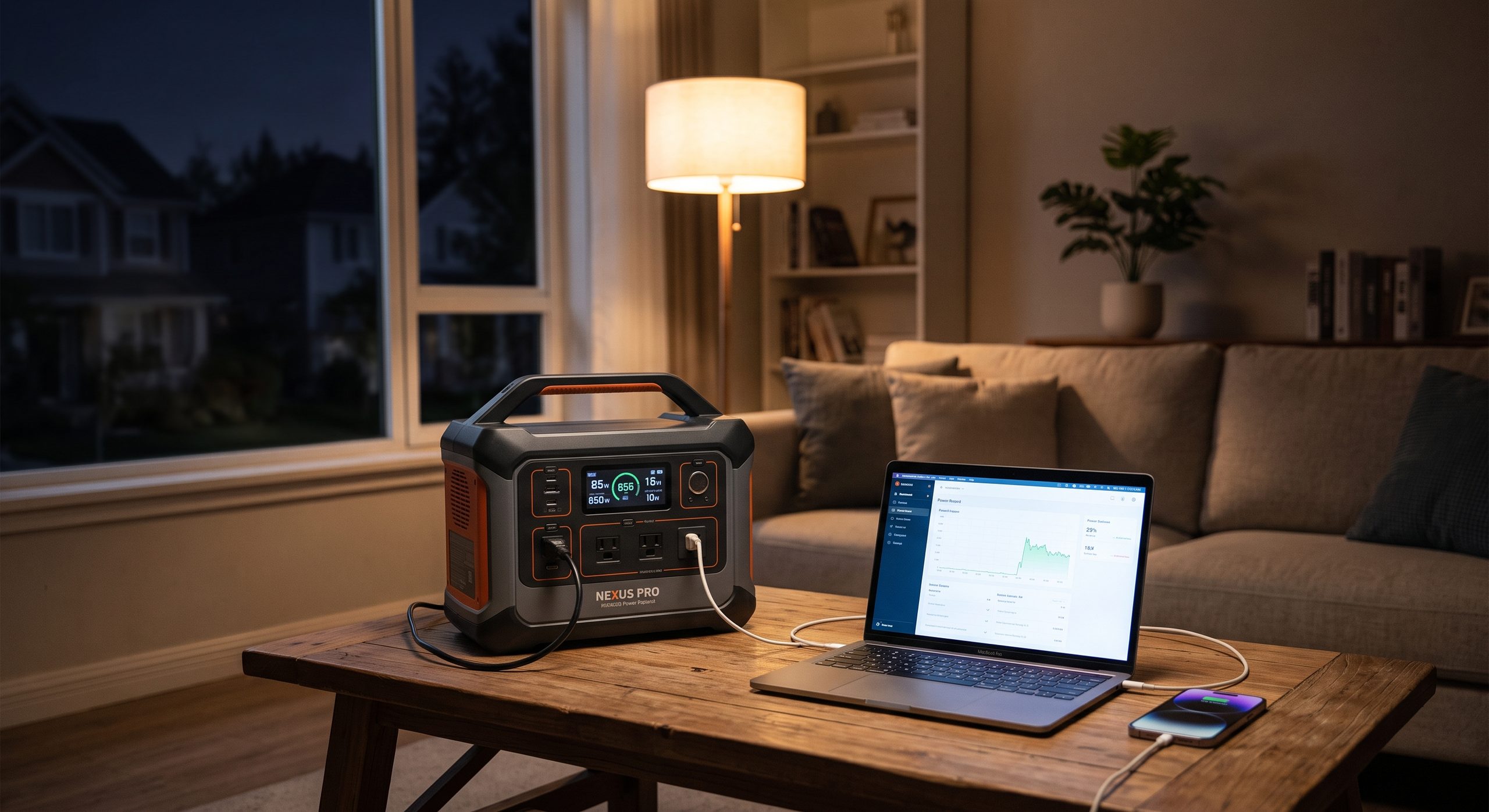
Power outages are becoming more frequent and less predictable, whether from summer storms, grid strain during heat waves, or winter ice storms. A portable power station has become one of the most practical ways to keep essential devices running without the cost, noise, and maintenance of a gas generator. This guide breaks down the best options for home backup in 2026, based on capacity, output, recharge speed, and real-world reliability during outages.
Quick Answer: Our Top Picks
- Best Overall: EcoFlow Delta Pro — best balance of capacity, output, and expandability
- Best Budget Option: Jackery Explorer 1000 v2 — reliable, affordable, easy to use
- Best for Whole-Room Backup: Bluetti AC200L — huge capacity with expandable batteries
- Best Compact Option: Anker Solix C800 — great for apartments and small households
- Best for Long Outages: Bluetti AC500 + B300S — modular system for multi-day backup
How Much Power Do You Actually Need?
Before comparing models, it helps to know what you’re trying to keep running. Most households don’t need to power the entire house — just the essentials:
| Appliance | Approximate Running Watts |
|---|---|
| Refrigerator | 100-400W (spikes higher on startup) |
| Wi-Fi router + modem | 10-20W |
| CPAP machine | 30-60W |
| Laptop | 30-65W |
| LED lights (per bulb) | 5-10W |
| Sump pump | 800-1,300W |
| Window AC unit | 500-1,200W |
A power station in the 1,000-1,500Wh range is generally enough to cover a refrigerator, some lighting, and device charging for 12-24 hours. For anything involving a sump pump, well pump, or AC unit, you’ll want to look at 2,000Wh and above, or a modular system that can add extra battery packs.
Top Portable Power Stations for Home Backup
1. EcoFlow Delta Pro — Best Overall
The Delta Pro strikes the best balance between capacity (3,600Wh, expandable to 25kWh with extra batteries), output (3,600W, enough for most large appliances), and smart home integration. It supports fast recharging from a wall outlet, solar panels, or even an EV charging station in a pinch. Its biggest strength is scalability: households can start with one unit and expand as their backup needs grow, without replacing the whole system.
Best for: Homeowners who want a system that can grow from «a few essentials» to «most of the house.»
2. Jackery Explorer 1000 v2 — Best Budget Option
For households that mainly need to cover a fridge, Wi-Fi, and phone charging during shorter outages, the Explorer 1000 v2 offers reliable output (1,000W, 2,000W surge) at a noticeably lower price than premium competitors. It’s also lighter and easier to move between rooms than higher-capacity units, which matters if you’re not planning to leave it permanently plugged in.
Best for: First-time buyers or smaller households looking for dependable backup without a large investment.
3. Bluetti AC200L — Best for Whole-Room Backup
With 2,048Wh of capacity and the option to add external battery packs, the AC200L is built for households that want to keep an entire room — lighting, a fridge, entertainment devices, and charging — running through extended outages. Its LiFePO4 battery chemistry also gives it a longer usable lifespan than older lithium-ion models.
Best for: Families who want backup for a «safe room» setup during multi-day outages.
4. Anker Solix C800 — Best Compact Option
Apartments and smaller homes often don’t need (or have space for) a large unit. The Solix C800 offers a practical 768Wh capacity in a compact, quiet form factor, enough to keep a router, lighting, and essential electronics running for a day or more. Anker’s companion app also makes it simple to monitor charge levels remotely.
Best for: Renters and apartment dwellers who need reliable backup without bulky equipment.
5. Bluetti AC500 + B300S — Best for Long Outages
For households in areas prone to multi-day outages (hurricane zones, rural areas with slow grid restoration), a modular system like the AC500 paired with B300S battery packs allows capacity to scale into the tens of kilowatt-hours. This setup can realistically keep a refrigerator, some lighting, and medical equipment running for several days without needing to ration power.
Best for: Rural households or hurricane-prone regions where outages regularly last 3+ days.
What to Look for When Buying a Power Station for Home Backup
- Battery chemistry: LiFePO4 (LFP) batteries last significantly longer (often 3,000+ charge cycles) than older lithium-ion NMC batteries, and are safer for long-term home storage.
- Continuous vs. surge wattage: Continuous wattage tells you what the unit can sustain; surge wattage matters for appliances with high startup draw, like refrigerators and sump pumps.
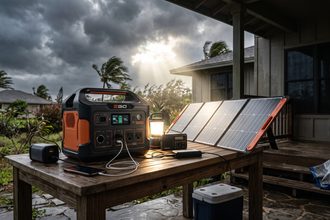
- Recharge options: Look for units that support fast AC wall charging (useful before a storm arrives) and solar input (useful if the outage lasts long enough to need topping up).
- Expandability: If there’s any chance your needs will grow, a modular system that accepts extra battery packs saves you from buying a second, separate unit later.
- Noise and ventilation: Unlike gas generators, portable power stations are silent, which matters if you’re running one indoors overnight.
Frequently Asked Questions
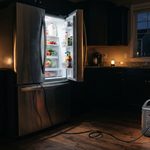
Can a portable power station run a refrigerator during an outage? Yes. Most 1,000Wh+ power stations can run a standard refrigerator for 12-24 hours, though the exact runtime depends on the fridge’s wattage and how often the compressor cycles on.
How long does a power station last during a multi-day outage? It depends on capacity and what’s connected. A 1,000Wh unit running only a fridge and some lighting might last a day; a 2,000Wh+ modular system can often stretch to several days, especially if paired with solar panels for daytime recharging.
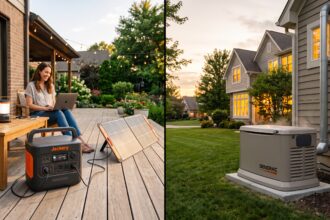
Is a power station better than a gas generator for home backup? For most households, portable power stations are quieter, safer to use indoors, and require no fuel storage or maintenance. Gas generators still have an edge for very high, sustained power draw (like running central AC), but for essentials — fridge, lighting, devices, medical equipment — a power station is usually the more practical choice.
Bottom Line
For most households, the EcoFlow Delta Pro offers the best long-term value thanks to its scalability, while the Jackery Explorer 1000 v2 is the smarter pick for anyone who just needs reliable backup for the essentials without a large upfront cost. Households in outage-prone regions should lean toward modular systems like the Bluetti AC500 setup, which can grow to cover several days without power.