Keeping a power station charged while actively hiking — rather than at a fixed campsite — comes with a specific challenge: you need a charging method that works while moving, doesn’t demand constant attention, and doesn’t add so much weight or bulk that it defeats the purpose of bringing lightweight gear in the first place. Here’s how to realistically recharge a power station on the trail, and which methods actually work versus which ones sound better on paper than they perform in practice.
The Main Options for Charging on the Trail
1. Solar Panels Mounted to Your Pack
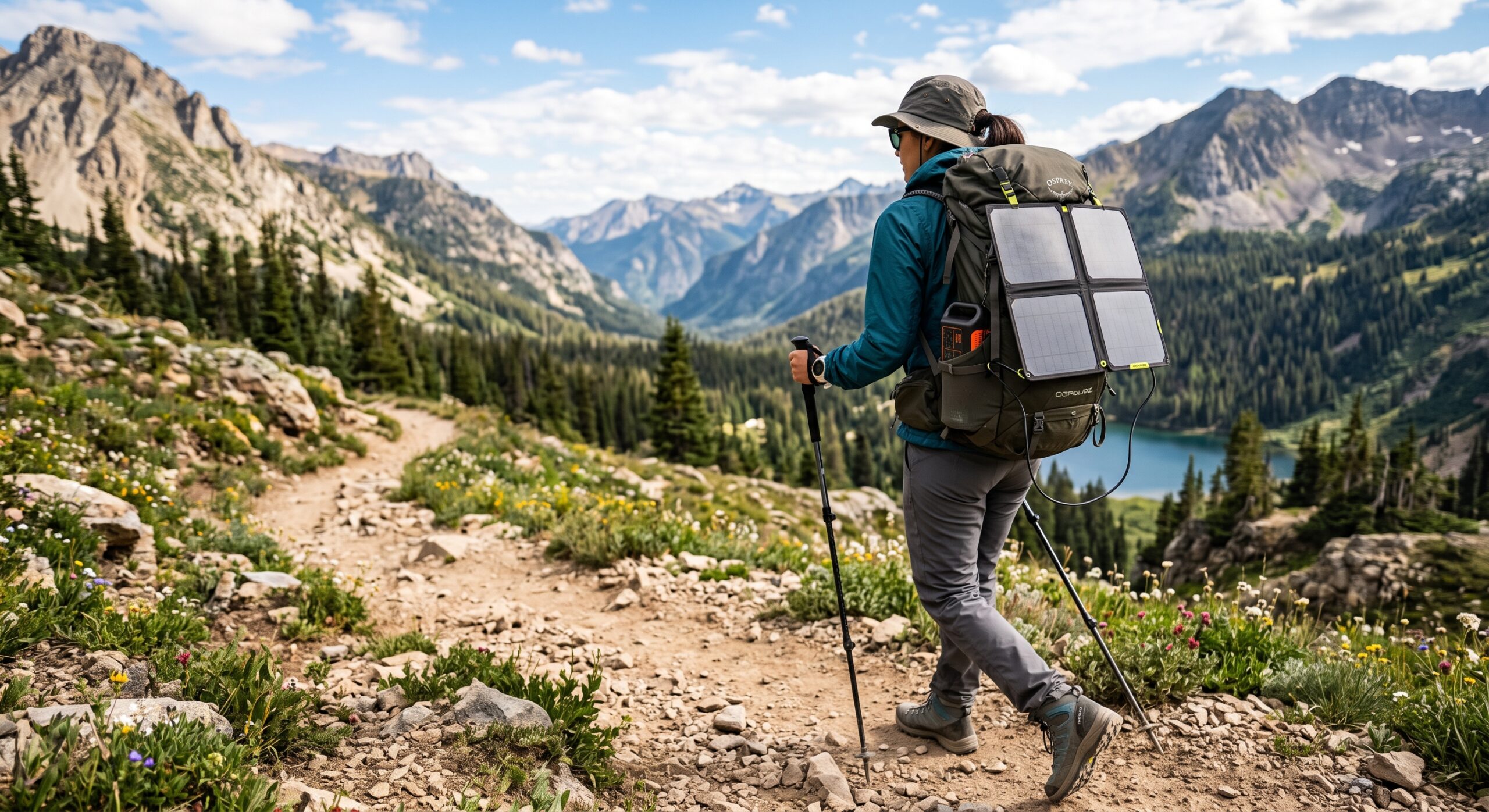
Small, lightweight solar panels can be strapped to the outside of a backpack, charging passively while you hike during daylight hours. This is the most popular method for multi-day trail charging, since it requires no extra time stopped and no extra weight beyond the panel itself.
Realistic performance: A pack-mounted panel rarely gets ideal sun angle consistently while you’re moving and the pack shifts position, so expect noticeably lower output than the same panel would deliver if set up flat and stationary at a rest stop. Still, even partial, inconsistent charging throughout a full day of hiking adds up to meaningful capacity by evening.
2. Solar Panels Set Up During Rest Stops
Rather than mounting a panel to your pack, some hikers prefer to unfold a panel during longer breaks (lunch stops, extended rests) and let it charge while stationary, then pack it away before continuing. This trades some total charging time for significantly better efficiency during the time it is charging, since the panel can be properly angled toward the sun.
Realistic performance: More efficient per minute of exposure than pack-mounted charging, but limited by how long and how often you actually stop.
3. Charging at Camp Each Night
For multi-day trips with a base camp or nightly stopping point, setting up a solar panel each evening or morning (rather than trying to charge while actively moving) is often the most practical and efficient approach, especially if mornings offer clear, direct sun before you break camp.
Realistic performance: The most efficient method per unit of time, since the panel can be properly positioned and left undisturbed, but only works if your schedule includes enough stationary time in good sun.
4. Hand-Crank or Kinetic Chargers
Hand-crank chargers exist but are largely impractical for anything beyond a genuine emergency — the amount of power generated per minute of cranking is extremely low compared to the effort required, making them a poor primary charging strategy for a power station of any real capacity.
Realistic performance: Useful only as a last-resort backup for a phone in a true emergency, not a realistic charging method for a power station.
How Much Charging Can You Realistically Expect?
A lightweight 20-40W foldable or pack-mounted solar panel, used inconsistently throughout a day of hiking (due to angle, shade, and pack movement), might realistically contribute 50-150Wh over a full day — enough to meaningfully offset phone charging and small device use, but not enough to fully recharge a larger power station from empty. For hikers relying entirely on solar to sustain a multi-day trip, this is an important expectation to set before leaving: solar while hiking supplements your capacity, it doesn’t replace a well-sized battery for the trip’s actual needs.
Choosing the Right Panel for Hiking
- Prioritize weight over maximum wattage. A 20-30W ultralight panel that you’ll actually carry and use consistently is more valuable than a 100W panel too heavy to bring.
- Look for panels with grommets or attachment points designed for strapping to a pack, if you plan to charge while moving rather than only at rest stops.
- Check the connector type to confirm compatibility with your specific power station or power bank before the trip, not after you’re already on the trail.
- Consider a smaller power bank instead of a full power station if your only need is phone and small device charging — the weight savings can be significant, and a smaller battery with a small panel is often more practical than a larger power station on a backpacking trip.
Tips for Maximizing Charging Efficiency on the Trail
- Face pack-mounted panels toward the sun as much as the trail direction allows, since a panel facing away from the sun for long stretches contributes very little.
- Use rest stops strategically. Even a 15-20 minute break with a panel properly angled toward the sun can contribute more than hours of poorly angled pack-mounted charging.
- Keep the panel clean. Dust and trail grime accumulated over days of hiking can measurably reduce charging efficiency if not wiped down periodically.
- Charge devices directly from the panel when possible, rather than routing everything through the power station first, since some direct-charging setups are slightly more efficient for simple device charging (phone, headlamp) versus the extra conversion step of charging a battery first.
- Plan charging around your itinerary, not just around having a panel — knowing which days include long stationary lunch breaks or an early camp arrival helps you plan when to prioritize setting up the panel properly rather than relying on inconsistent pack-mounted charging alone.
When Solar Isn’t Enough
If your hiking trip’s power needs (frequent device charging, a satellite communicator, camera equipment) exceed what trail-based solar charging can realistically provide, the more reliable solution is simply carrying enough battery capacity from the start to cover the trip without relying on recharging at all. This is often lighter and simpler than trying to squeeze inconsistent solar performance out of a moving pack, especially for trips under a week.
Bottom Line
Charging a power station while actively hiking works best as a supplement to a well-sized battery, not a full replacement for carrying enough capacity from the start. Pack-mounted solar panels provide modest, passive charging throughout the day, while intentionally setting up a panel during rest stops or overnight camps delivers meaningfully better efficiency for the time invested. For most multi-day hikes, a combination — enough battery capacity to comfortably cover the trip, plus a lightweight panel to extend that margin — is the most realistic and dependable approach.